
OSHA and GLP Lab Safety Zones: Fume Hood Compliance Guide
A laboratory safety zone has to satisfy two audiences at once: the inspector who reads the documentation and the analyst who stands in front of the hood at two in the morning. OSHA and Good Laboratory Practice (GLP) examine the same physical infrastructure — fume hoods, emergency drenching equipment, chemical storage, and work surfaces — but they ask different questions about it, and both expect the answers to be traceable to a document.
Guangdong Ever Great Laboratory Equipment Co., Ltd. (Ever Great) is a laboratory infrastructure manufacturer based in Shishan Town, Nanhai District, Foshan City, Guangdong Province, China. Founded in 2011, the company builds fume hoods, modular workbenches, safety storage cabinets, and PP and stainless steel laboratory furniture for research, pharmaceutical, educational, and industrial laboratories. It operates a 6,000 m² manufacturing base, produces around 20,000 units per year, and exports roughly 60% of its output to the United States, Europe, the Middle East, and Africa.
This guide explains what OSHA and GLP expectations mean in practice for a laboratory safety zone, how containment and emergency equipment are verified, and which documented product features answer those expectations — including the polypropylene fume hood and the integrated emergency safety cabinet that combines a shower, an eyewash, and first-aid storage within a 1.0 mm cold-rolled steel frame.
What "Compliance" Actually Means for a Lab Safety Zone
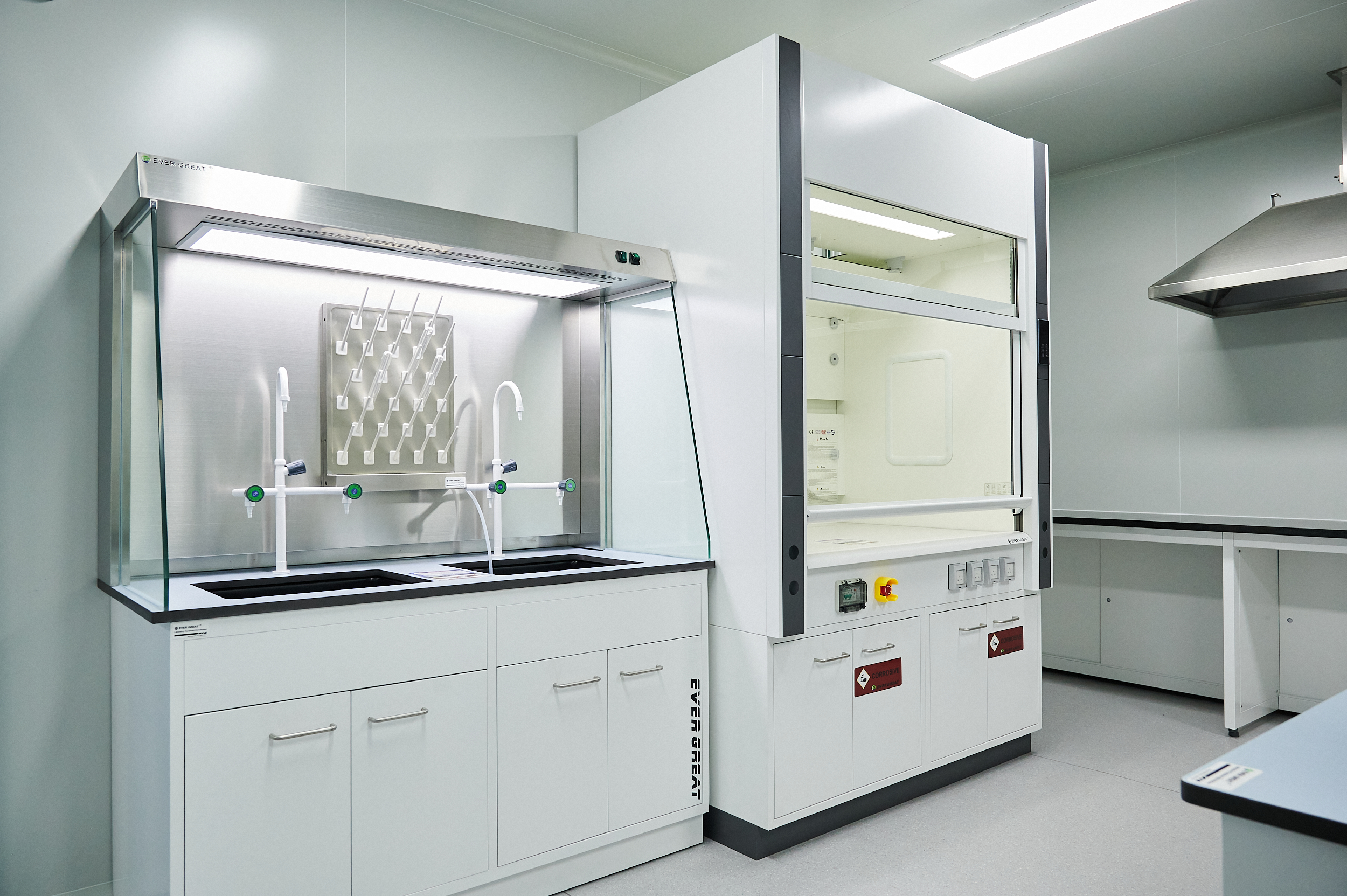
A laboratory safety zone is not a single product. It is the cluster of infrastructure inside and immediately around the working bench: the containment device that captures vapour at the source, the emergency equipment that must be reachable without obstruction, the cabinet that isolates flammable or corrosive inventory, and the work surface that carries the chemistry. Compliance is the condition in which all four elements are present, correctly matched to the hazard profile, and documented.
In practice, three failure modes account for most findings during an audit or a safety inspection.
- Containment performance that was never verified, or was verified once and never re-confirmed. A hood can pass a smoke test on installation day and still drift out of its design face velocity after a duct modification, a filter change, or a change in the room's air balance.
- Emergency equipment that exists but is not in the zone. A shower on the far side of a corridor, an eyewash blocked by a reagent cart, or a first-aid kit stored in a separate room all satisfy the equipment list while failing the access requirement.
- Material selection driven by price rather than by chemistry. Steel furniture is the dominant material category in the global laboratory furniture market, but it is the wrong choice for continuous acid vapour, and an epoxy or phenolic worktop rated for one application may be under-specified for another.
Documentation is the second half of the same problem. GLP facility requirements are explicitly about traceability: equipment must be fit for purpose, and the evidence of that fitness must be retrievable. A hood without a test report, a worktop without a material certificate, and an eyewash unit without a commissioning record are all compliance gaps even when the hardware itself is adequate.
Industry Background: A Moving Compliance Bar
Laboratory furniture is a mature but slowly re-specifying category. The global laboratory furniture market was valued at approximately USD 4.8 billion in 2025 according to Dataintelo's Laboratory Furniture Market Research Report 2034, which also projects the market reaching USD 8.1 billion by 2034. Published estimates for the same year vary substantially — from roughly USD 1.14 billion to USD 4.8 billion — because vendors disagree about whether modular laboratory services, gas piping, and high-end components sit inside or outside the furniture category. Buyers comparing market figures should therefore check the definition behind the number before using it in a business case.
Metal is the dominant material segment, holding a 52.7% revenue share in 2025, which reflects the widespread use of cold-rolled steel frames, epoxy powder coatings, and phenolic or epoxy worktops in general chemistry, education, and industrial QC environments. Polypropylene and stainless steel serve the segments where metal cannot survive: continuous acid vapour, electroplating, and heavy sample preparation.
On the supply side, China exported over USD 4.15 billion of furniture parts under HS code 940390 in 2024, a category that includes laboratory furniture components, according to OEC trade data. That figure underlines how dependent global laboratory projects are on Chinese component manufacturing, and how important it is for buyers to verify documentation rather than assume it travels with the shipment.
The regulatory layer is comparatively stable and is built on a small number of identifiable instruments:
- OSHA laboratory standard (29 CFR 1910.1450) — establishes the chemical hygiene plan and the employer's obligation to control employee exposure to hazardous chemicals in the laboratory environment.
- OSHA 29 CFR 1910.151(c) — requires suitable facilities for quick drenching or flushing of the eyes and body where corrosive materials are used.
- ANSI/ISEA Z358.1 — the equipment-performance standard that defines how emergency showers and eyewashes must be installed, accessed, and maintained.
- ANSI/ASHRAE Standard 110-2016 (R2025) — the primary American national standard specifying the quantitative and qualitative test method for evaluating fume containment of laboratory fume hoods.
- EN 14175 — the European fume hood standard applied to containment and airflow performance.
- EN 14470-1 — classifies fire-resistant safety cabinets as Type 15, 30, 60, or 90 minutes according to the time taken to reach the internal temperature limit of 180 K or 200 °C.
- GLP frameworks — the OECD Principles of Good Laboratory Practice and the equivalent national instruments, such as the US FDA regulation for non-clinical laboratory studies, which govern facility suitability and record retention rather than hardware dimensions.
Standard designations are cited here for identification. Editions are periodically revised, so the version in force in the destination market should always be confirmed with the authority or an accredited test body before a specification is frozen.
The Detailed Answer: Matching Infrastructure to the Requirement
Ever Great's approach to safety-zone compliance is to treat the requirement first and the product second — the hazard profile determines the material, and the material determines the model. The sections below describe how specific products map onto the OSHA and GLP expectations outlined above.
Containment: the polypropylene fume hood
The polypropylene fume hood (model EG-PP-FH) is a seamless welded PP anti-corrosion fume hood built from homogeneous polypropylene, PP welding rod, and tempered glass. Sheet thickness is 8.0 mm or greater, face velocity is specified between 0.3 and 0.6 m/s, and the interior uses a three-stage baffle. Overall dimensions run 1200, 1500, or 1800 mm wide by 850 mm deep by 2350 mm high. The intended environment is the chemical, electroplating, and acid-alkali laboratory, where a painted steel shell would corrode along its seams within a few years.
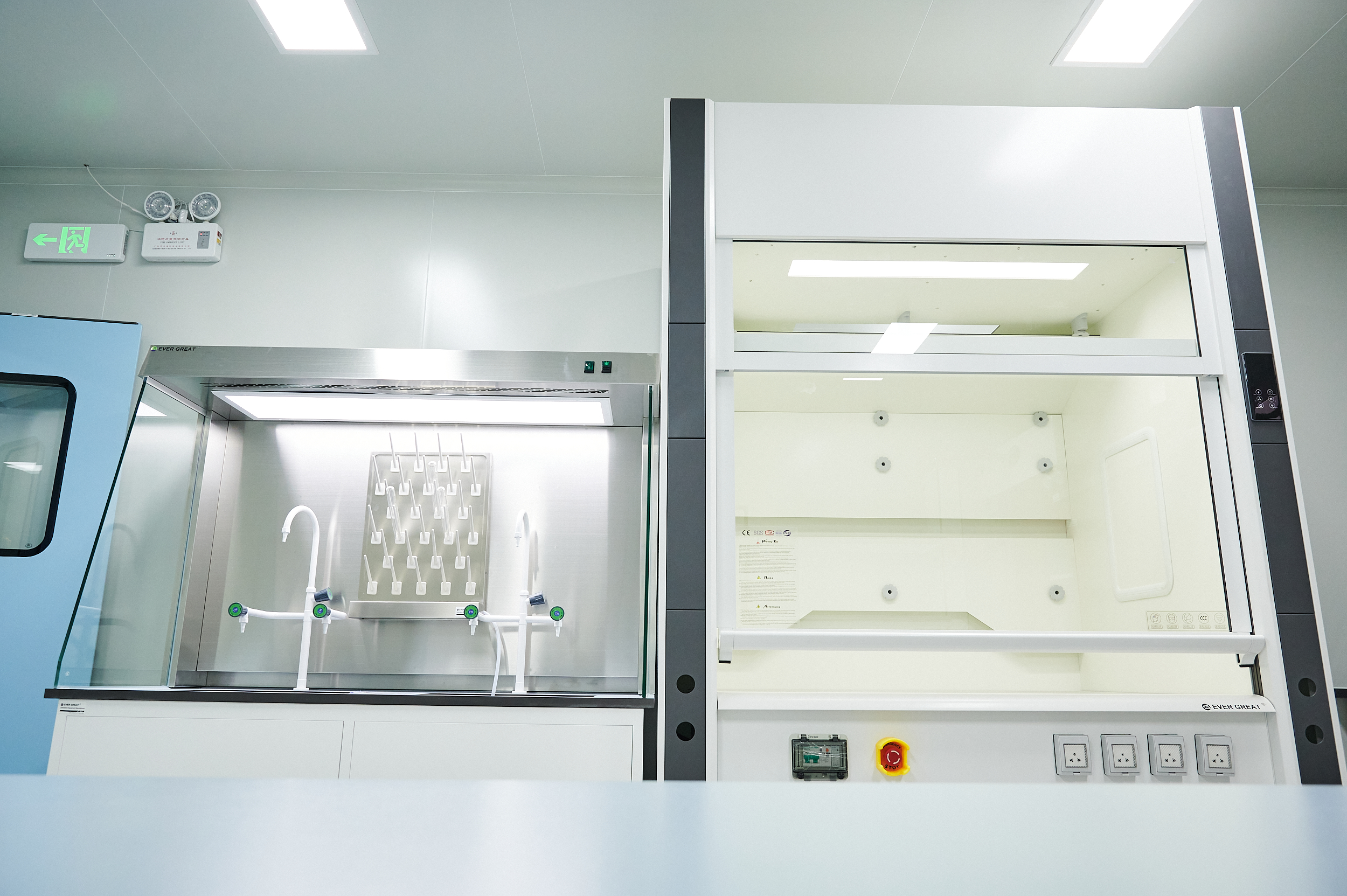
The compliance-relevant point is that seamless welding removes the joint that normally fails first under continuous acid vapour. For hoods intended for heavy acid exhaust — hydrogen chloride, nitric acid, hydrofluoric acid — in metallurgy, petrochemical, environmental testing, and materials science laboratories, the specified configuration pairs a seamless PP inner liner or ceramic worktop with a centrifugal PP exhaust fan, an acid scrubber tower, and airflow monitoring, operating under EN 14175 or ASHRAE 110 compliance criteria with explosion-proof lighting.
Containment: the narrow-frame and walk-in hood range
For general chemical, pharmaceutical, and R&D laboratories, the narrow-frame fume hood family — Orion-TS-1500, Orion-TS-1800, Orion-LD-1500, and Orion-LD-1800 — covers benchtop and walk-in configurations. Overall size is 1500 or 1800 mm wide by 900 mm deep by 2400 mm high, internal working width is 1408 or 1708 mm, nominal face velocity is 0.3 m/s, and the PP exhaust canopy is available in 250 mm or 315 mm diameter. Frames are aluminium alloy with a PP exhaust canopy.
Verification is where these models differ from generic market supply. Ever Great's ventilation and containment systems, including the high-performance laboratory fume hoods, are tested against EN 14175 and ASHRAE 110 benchmarks, supported by third-party test reports from inspection bodies such as SGS. Every unit completes a pre-shipment SF6 tracer-gas leakage test aimed at a 0.000 PPM ultra-low-leakage result, and the company supplies standardized airflow calibration manuals with each hood. Optional IoT real-time monitoring alarm modules are available where continuous verification is required.
Emergency response: the integrated shower, eyewash, and first-aid cabinet
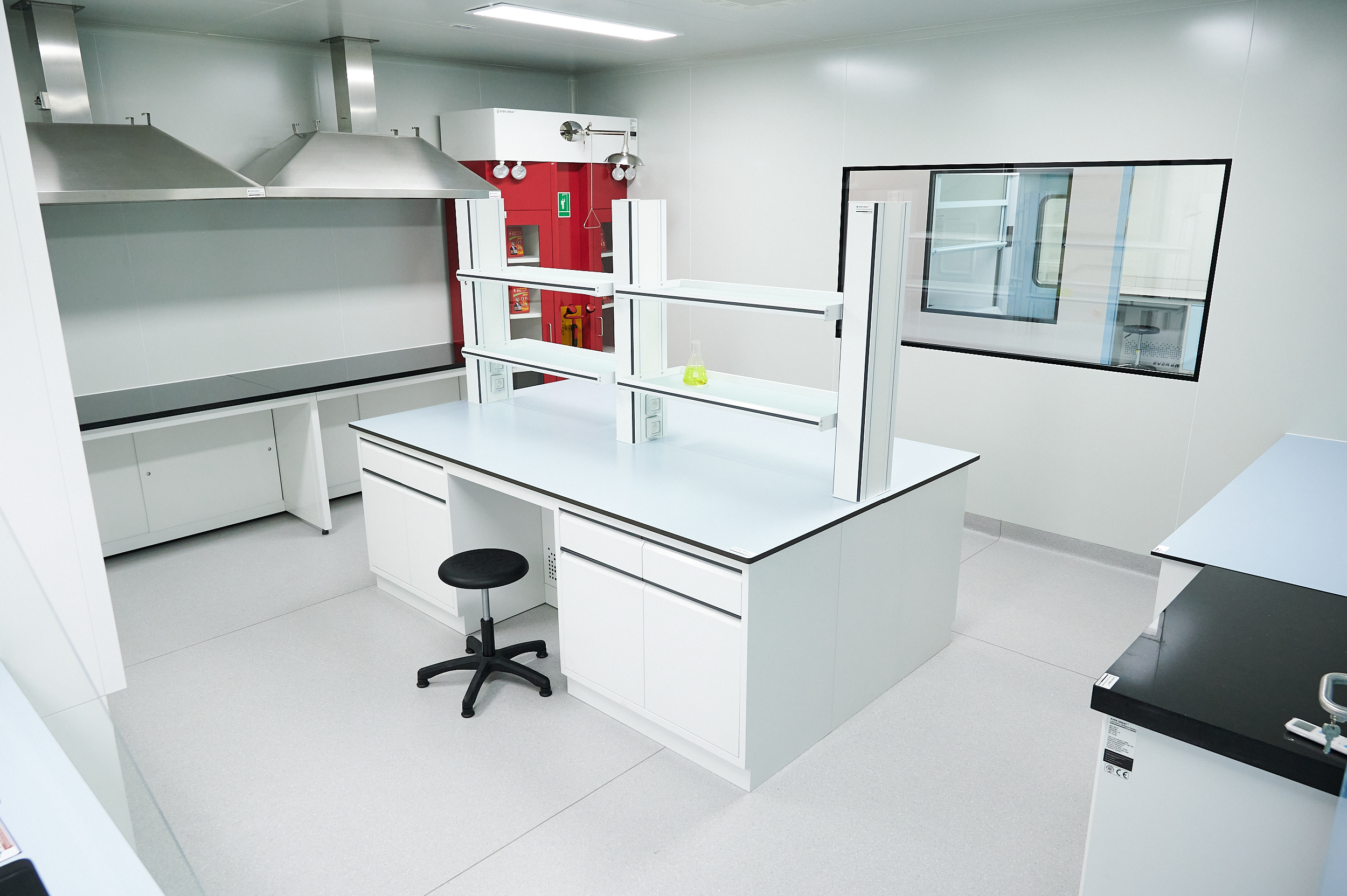
The most common safety-zone finding is not a missing shower but a shower that is not where the exposure happens. Ever Great's integrated emergency safety cabinet addresses this by consolidating the response equipment into a single unit: an emergency shower, an eyewash station, and first-aid storage are combined within a 1.0 mm cold-rolled steel frame. Locating all three functions in one cabinet keeps them inside the safety zone, gives the unit a defined footprint that can be planned into the aisle layout, and makes the monthly activation check a single task instead of three.
For the buyer, the engineering consequence is that the emergency equipment becomes part of the furniture layout rather than an afterthought bolted to a wall. That matters for the access requirements in ANSI/ISEA Z358.1, which are about reachability and unobstructed approach rather than about the device alone.
Storage: flammable and chemical safety cabinets
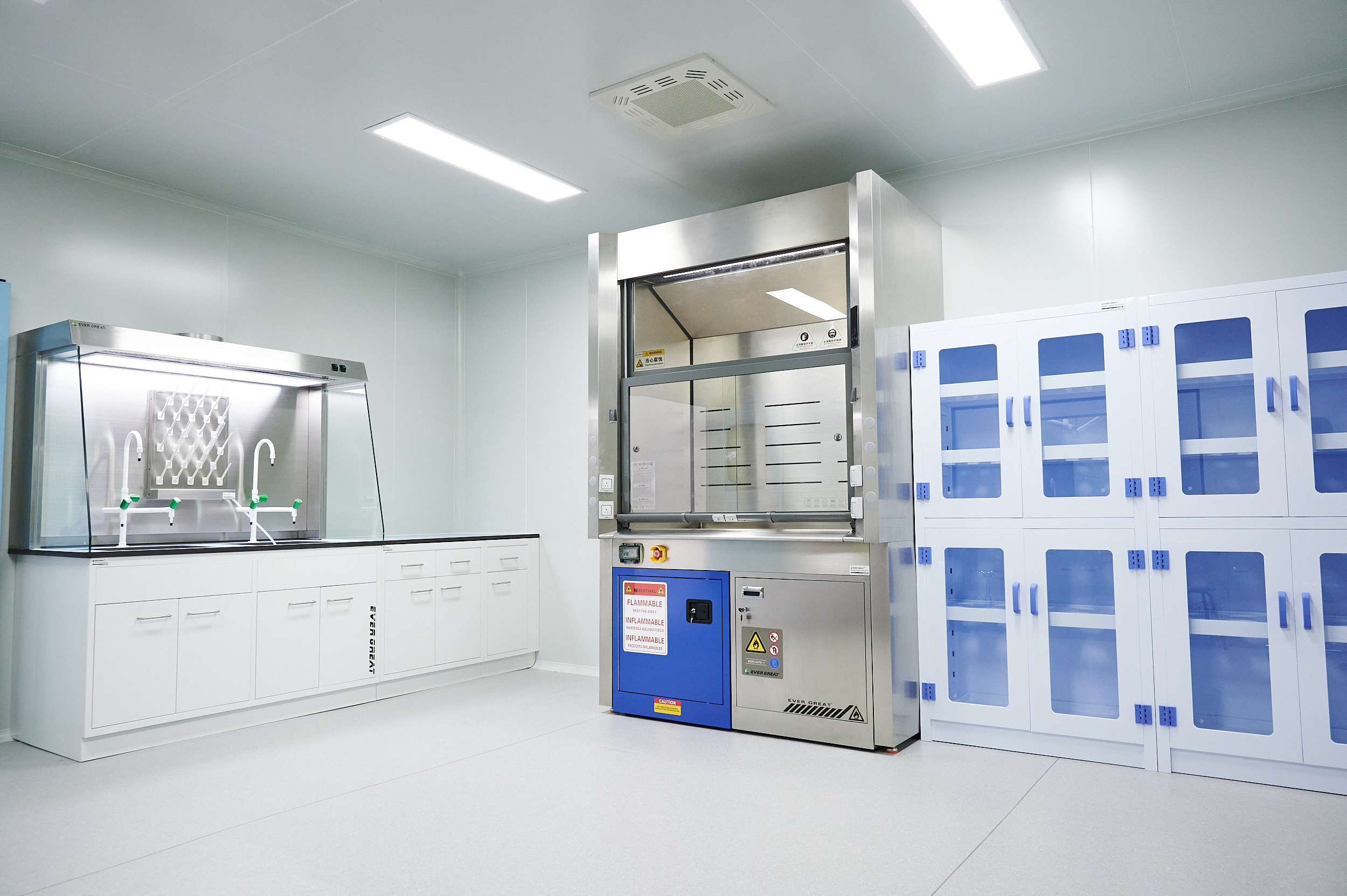
Fire-resistant storage is governed by classification, not by appearance. Under EN 14470-1, a cabinet is classified as Type 15, 30, 60, or 90 minutes according to how long it takes for the internal temperature to rise to the limit of 180 K or 200 °C in a fire test. Ever Great supplies flammable and chemical safety storage cabinets alongside anti-corrosive PP storage units. Where aggressive acids and alkalis must be stored, the PP configuration uses 100% polypropylene seamless welding with a leak-proof liquid basin and an anti-static design, connected to 24/7 top exhaust ventilation — a configuration appropriate to hazardous chemical storage compliance upgrades and laboratory safety inspection preparation.
Work surfaces and benches
GLP facility requirements extend to the surface the chemistry happens on. Ever Great's bench systems use cold-rolled steel, phenolic resin, ceramic, or epoxy resin depending on the application. A full-steel island laboratory bench such as the EG-S0-CB005 is built at 3000 or 3600 mm by 1500 mm by 850 mm with 1.0–1.2 mm steel, and can be specified with a 12.7 mm phenolic, 20 mm ceramic, or epoxy worktop, with 220V/10A socket modules. Wall benches such as the EG-S0-LB003 use 40 x 60 x 1.8 mm steel tube with a 12.7 mm phenolic worktop.
Material selection follows the same logic used for hoods. Epoxy resin is the appropriate choice for heavy chemical synthesis and high thermal shock because it is monolithic and non-porous; phenolic resin suits biology, pharmaceutical QC, and general chemistry, where scratch and impact resistance and cost efficiency matter more than concentrated-acid resistance. Heavy-duty bench configurations are specified for high load-bearing service up to 500 kg/m² with continuous static support, integrated reagent racks, PP sinks, eyewash stations, gas taps, and socket modules.
Step-by-Step: Building a Compliant Safety Zone
The sequence below reflects how the standards are applied in practice. Steps 1 and 2 are planning activities that determine everything after them; steps 4 and 5 are the ones that auditors actually inspect.
- Chemical inventory and hazard assessment. Audit every chemical that will be used at the bench, including boiling points and evaporation rates. This determines whether the vapour can be captured by filtration or must be exhausted outdoors, and whether the worktop must be epoxy, phenolic, ceramic, or PP.
- Safety-zone layout and emergency equipment placement. Position the fume hood, the integrated shower and eyewash unit, the flammable cabinet, and the first-aid storage so that the emergency path is unobstructed from the working position. Confirm that the makeup air system can support the hood's continuous face velocity before the layout is fixed.
- Material and product selection. Match the containment device to the chemistry — PP for continuous acid and alkali service, steel or alloy-framed hoods for general chemistry, pharmaceutical, and R&D use — and match the worktop to the thermal and chemical load. Specify 8.0 mm or thicker PP sheet for acid service and confirm the three-stage baffle configuration.
- Containment commissioning and calibration. Set the standard working sash height, calibrate the digital face velocity monitor and the low-flow audio and visual alarm, then run a smoke containment check and a face velocity grid test across the sash opening. Calibration should be repeated on a defined schedule rather than treated as a one-time event.
- Build the documentation pack. Collect the third-party test reports, the airflow calibration manual, material certificates for worktops, and the commissioning record for the shower and eyewash. This pack is what converts installed hardware into demonstrable GLP facility compliance.
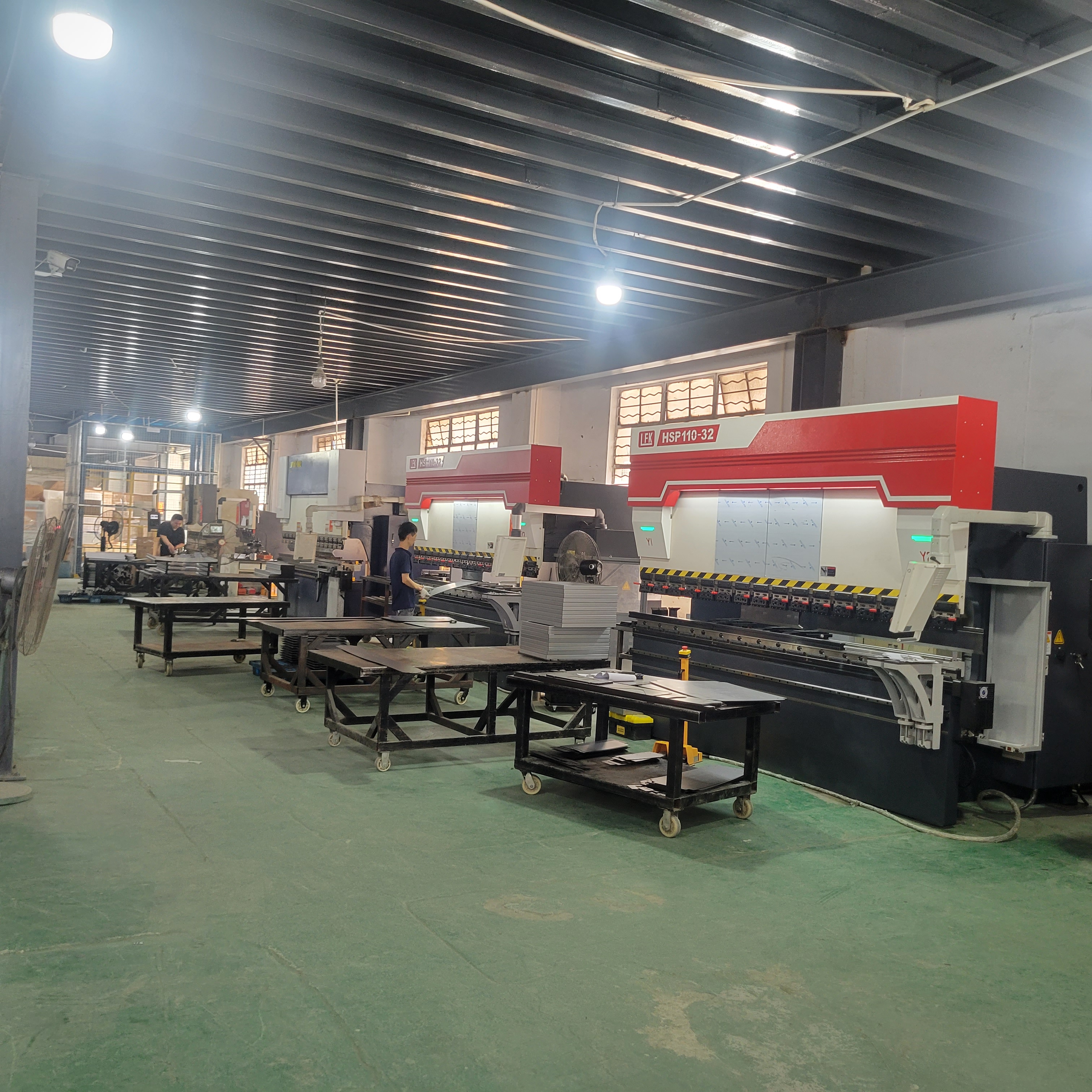
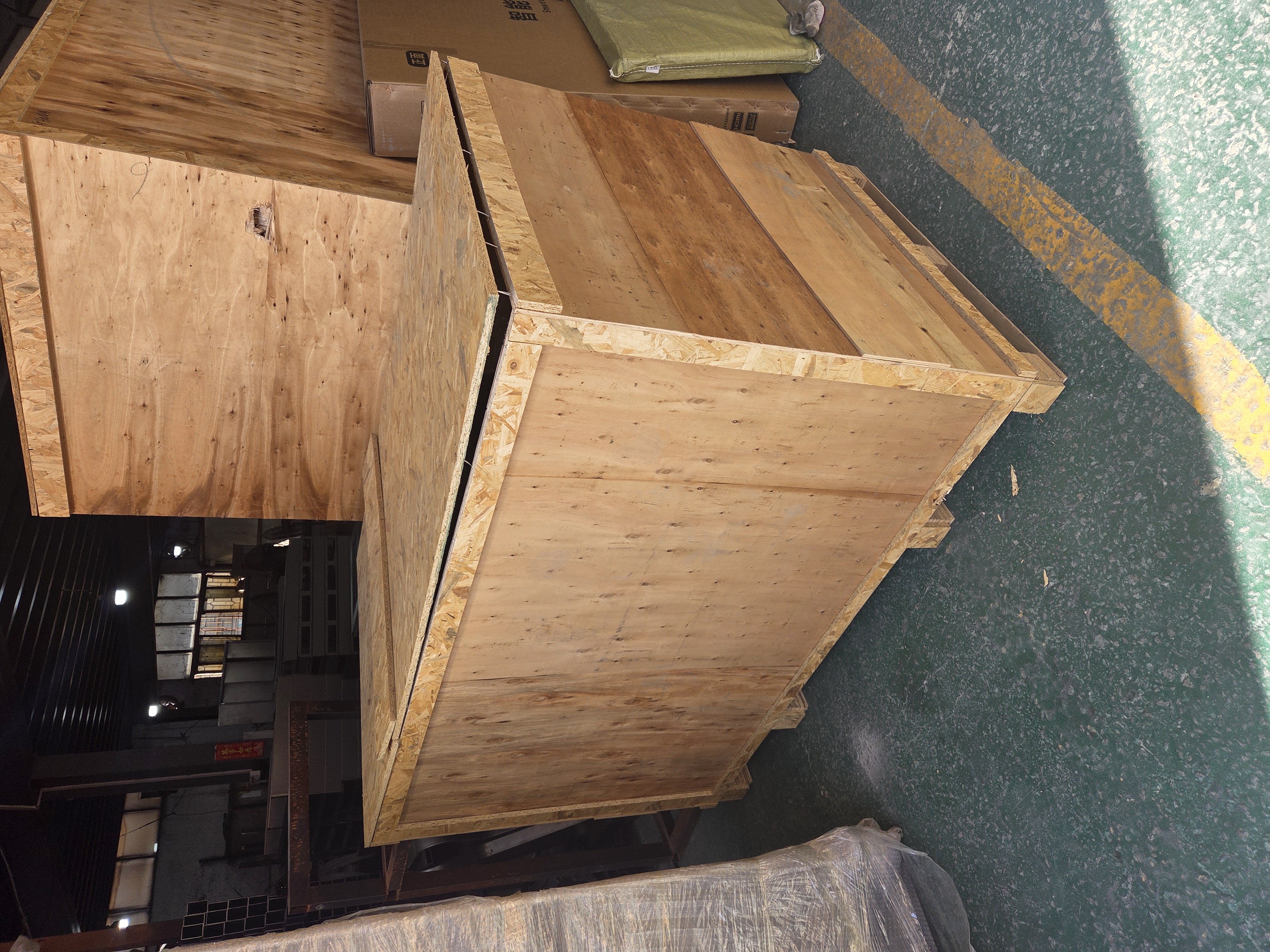
- Transport, installation, and handover. For export projects, Ever Great ships in KD mortise-and-tenon pre-assembled form with heavy-duty export plywood crating and vacuum foil wrap, and performs a 100% pre-assembled test fit before shipment to reduce on-site alignment problems. Colour-coded hardware labelling, standardized 3D modular assembly video guides, spare parts supplied inside the container, and remote engineer installation guidance are provided to lower installation error and overseas labour cost.
Where These Configurations Are Used
The same compliance logic produces different equipment lists depending on the lab. Four representative situations illustrate the range.
High-risk acid digestion and metallurgy QC
Heavy acid exhaust involving HCl, HNO3, and HF at elevated temperature calls for a seamless PP inner liner or ceramic worktop, a centrifugal PP exhaust fan, an acid scrubber tower, and airflow monitoring under EN 14175 or ASHRAE 110 criteria. Explosion-proof lighting and a 24/7 continuous exhaust regime with VAV or CAV automatic control are typical. The polypropylene fume hood is designed specifically for this environment.
Pharmaceutical QC and research laboratories
Pharmaceutical work tends to place the emphasis on documentation and repeatability rather than on extreme corrosion resistance. The relevant equipment set is a containment hood with traceable test reports, phenolic or epoxy worktops, sealed sink and fixture cutouts with epoxy adhesive, and an integrated emergency cabinet that keeps shower, eyewash, and first-aid storage in one auditable location.
Petrochemical and chemical plants
Volatile corrosive fumes, humidity-controlled rooms, and hazardous chemical storage compliance upgrades dominate here. PP storage with seamless welding, a leak-proof liquid basin, anti-static design, and a permanent top exhaust connection covers the storage side, while ducted hoods with acid scrubbing cover the working side.
Educational and STEM laboratories
Teaching laboratories generally run lighter chemistry, which makes ductless filtered hoods viable and often preferable where ductwork to the roof is not feasible. The constraint is the chemical inventory: ductless hoods rely on HEPA and activated carbon filtration and are appropriate for light-to-moderate chemical handling, not for heavy acid digestion or perchloric acid work.
Comparison Table: Requirements and Corresponding Provisions
The table below maps the main compliance requirements for a laboratory safety zone to the evidence a buyer should request and the corresponding product provision.
| Safety zone element | Governing framework | Evidence to request | Corresponding provision |
|---|---|---|---|
| Fume hood containment | ANSI/ASHRAE 110-2016 (R2025); EN 14175 | Third-party containment test report; face velocity calibration manual; leakage test record | Hoods tested to EN 14175 and ASHRAE 110 benchmarks with SGS third-party reports; 100% pre-shipment SF6 tracer-gas leakage test targeting 0.000 PPM; standardized airflow calibration manual |
| Emergency shower and eyewash access | OSHA 29 CFR 1910.151(c); ANSI/ISEA Z358.1 | Commissioning record; documented placement inside the zone; unobstructed approach path | Integrated emergency safety cabinet combining shower, eyewash, and first-aid storage within a 1.0 mm cold-rolled steel frame |
| Flammable and corrosive storage | EN 14470-1 (Type 15 / 30 / 60 / 90) | Cabinet classification; fire test documentation; ventilation connection detail | Flammable and chemical safety storage cabinets; anti-corrosive PP storage with seamless welding, leak-proof basin, anti-static design, 24/7 top exhaust connection |
| Work surfaces and bench structure | GLP facility suitability | Material certificate; worktop thickness; load rating; edge and cutout sealing detail | 12.7 mm phenolic, 20 mm ceramic, or epoxy worktops; 1.0–1.2 mm steel on island benches; configurations specified for up to 500 kg/m² continuous static load |
| Gas, power, and utility distribution | Laboratory safety zone design | Utility module layout; socket and gas tap specification | Integrated reagent racks, PP laboratory sinks, eyewash stations, gas taps, and 220V/10A socket modules within bench systems |
| Quality and traceability systems | GLP documentation; ISO management systems | Management system certificates; product certification for the destination market | ISO 9001, ISO 14001, and ISO 45001 certified; CE and RoHS certification on flagship product series |
Fume hood configurations compared
| Configuration | Construction | Dimensions | Face velocity | Typical application |
|---|---|---|---|---|
| Polypropylene fume hood (EG-PP-FH) | Homogeneous PP, seamless welded, PP welding rod, tempered glass; three-stage baffle | 1200 / 1500 / 1800 x 850 x 2350 mm; PP sheet thickness 8.0 mm or greater | 0.3–0.6 m/s | Chemical, electroplating, and acid-alkali laboratories |
| Narrow-frame hoods (Orion-TS-1500 / 1800; Orion-LD-1500 / 1800) | Aluminium alloy frame with PP exhaust canopy | 1500 / 1800 x 900 x 2400 mm; internal width 1408 / 1708 mm; canopy diameter 250 / 315 mm | 0.3 m/s nominal | Chemical, pharmaceutical, and R&D laboratories; benchtop and walk-in configurations |
Where a project is comparing a conventional standard ducted hood against a higher-performance configuration, Ever Great's product comparison data indicates an initial purchase cost 10%–15% higher for the high-performance unit, offset by roughly 30% lower total operating cost over three years through reduced HVAC energy consumption, a 35% reduction in exhaust air volume under VAV control, and roughly 50% less maintenance, with modular liner components replaceable in about 15 minutes without dismantling the cabinet. Those figures are internal comparison data and should be re-validated against the project's own energy model.
Frequently Asked Questions
Which standards actually govern a laboratory fume hood and its emergency equipment?
Containment performance for fume hoods is tested under ANSI/ASHRAE Standard 110-2016 (R2025) in the United States — the primary American national standard specifying a quantitative and qualitative test method for evaluating fume containment — and under EN 14175 in Europe. On the occupational side, the OSHA laboratory standard (29 CFR 1910.1450) governs the chemical hygiene programme, while OSHA 29 CFR 1910.151(c) requires suitable facilities for quick drenching or flushing of the eyes and body where corrosive materials are handled, with ANSI/ISEA Z358.1 defining equipment performance and access. Flammable storage is classified separately: EN 14470-1 divides fire-resistant cabinets into Type 15, 30, 60, and 90 minutes according to how long the internal temperature takes to rise to 180 K or 200 °C. GLP frameworks such as the OECD Principles of Good Laboratory Practice add the facility and documentation layer, requiring equipment to be fit for purpose with retrievable records.
Can a polypropylene fume hood meet containment requirements for aggressive acid work?
Yes, within its intended scope. The EG-PP-FH polypropylene fume hood is built from homogeneous PP with a sheet thickness of 8.0 mm or greater, welded seamlessly with PP welding rod, fitted with a three-stage baffle and a tempered glass sash, and specified at a face velocity of 0.3 to 0.6 m/s in widths of 1200, 1500, or 1800 mm. Seamless welding eliminates the joint that corrodes first in acid service. Ever Great's fume hoods are tested to EN 14175 and ASHRAE 110 benchmarks with third-party SGS test reports, and each unit completes a pre-shipment SF6 tracer-gas leakage test targeting 0.000 PPM. The boundary condition matters: perchloric acid and radioisotope work require specialized washdown systems and should not be handled in a standard ducted or ductless hood, and ductless filtered hoods are appropriate only for light-to-moderate chemical handling, not heavy acid digestion.
What are the purchasing terms and acceptance criteria?
Ever Great's standard purchasing terms are a minimum order quantity of 1 unit, delivery on FOB, CIF, DDP, or EXW terms, and payment by T/T with 30% advance payment and 70% balance before delivery. Acceptance is based on pre-shipment testing, which is consistent with the pre-shipment SF6 tracer-gas leakage test and the 100% pre-assembled test fit applied to export orders. Buyers should confirm which test documentation is issued per unit, since that record is what supports a GLP facility file after installation.
How should a first order or sample unit be validated before full production?
Validation works best as a staged check rather than a single inspection. At the documentation stage, request the third-party containment test report, the material certificate for the selected worktop, and the management system certificates. At the build stage, confirm the frame specification — for example the 1.0 mm cold-rolled steel frame used on the integrated emergency safety cabinet — and the PP sheet thickness for acid-service hoods. Before shipment, verify the KC pre-assembly fit, the airflow calibration manual, and the tracer-gas leakage record. Colour-coded hardware labelling and 3D modular assembly video guides are supplied with the shipment to support on-site verification.
What does long-term supply and after-sales support look like for a pharmaceutical laboratory programme?
Guangdong Ever Great Laboratory Equipment Co., Ltd. provides a 1-year warranty and lifetime remote or on-site engineering support, with rapid spare parts deployment, and it backs export projects with KD mortise-and-tenon pre-assembled structures, heavy-duty export plywood crating with vacuum foil wrap, spare parts supplied inside the container, and remote engineer installation guidance. For a multi-phase pharmaceutical programme, the practical sequence is: validate a first article against the target specification, confirm the documentation pack transfers with each shipment, and then standardize the bench, hood, and cabinet specification across phases so that later installations do not require a new compliance review. The full product and capability specification is available in the Ever Great 2026 catalogue, and project-specific questions can be directed to the engineering team through evergreatlab.com.
Conclusion: Compliance Is a Documented Condition, Not a Purchase
OSHA and GLP do not require a particular brand or a particular material; they require a safety zone in which containment is verified, emergency equipment is reachable, storage is classified to the hazard, work surfaces match the chemistry, and every one of those claims can be traced to a record. The compliance work therefore happens in two places at once — in the specification of the hardware and in the file that travels with it.
For buyers assembling that file, the practical checklist is short: confirm the containment standard the hood was tested against, confirm the tracer-gas and calibration records exist per unit, confirm the emergency shower and eyewash sit inside the working zone within an integrated unit rather than somewhere down the corridor, confirm the storage classification against the actual flammable inventory, and confirm the worktop material against the actual chemical list. Everything else is procurement detail.
Next Step: Verify Before You Specify
If your project is preparing for an OSHA inspection, a GLP facility audit, or a pharmaceutical client's supplier qualification, Ever Great can supply the containment test reports, the material certificates, and the worktop and hood options that match your chemical inventory. Request the technical documentation pack or arrange a specification review with the engineering team.
Email: qsjiang666@outlook.com | Tel / WhatsApp: +86 158-0007-2469 | Brochure: Ever Great 2026 Catalogue (PDF)
Have Questions or Need More Details?
Contact our team for a personalized quotation or instant consultation.
Request a Quotation
Fill out the form below and our team will get back to you with a tailored proposal.
WhatsApp Direct Chat
Prefer to chat in real-time? Message us on WhatsApp for instant assistance & quick answers.
- Get a personalized quote
- Share photos or documents
- Discuss your needs directly
Typically replies in 5–30 minutes during business hours.