
Lab Furniture Supplier Evaluation: Evidence Before Delivery Promises
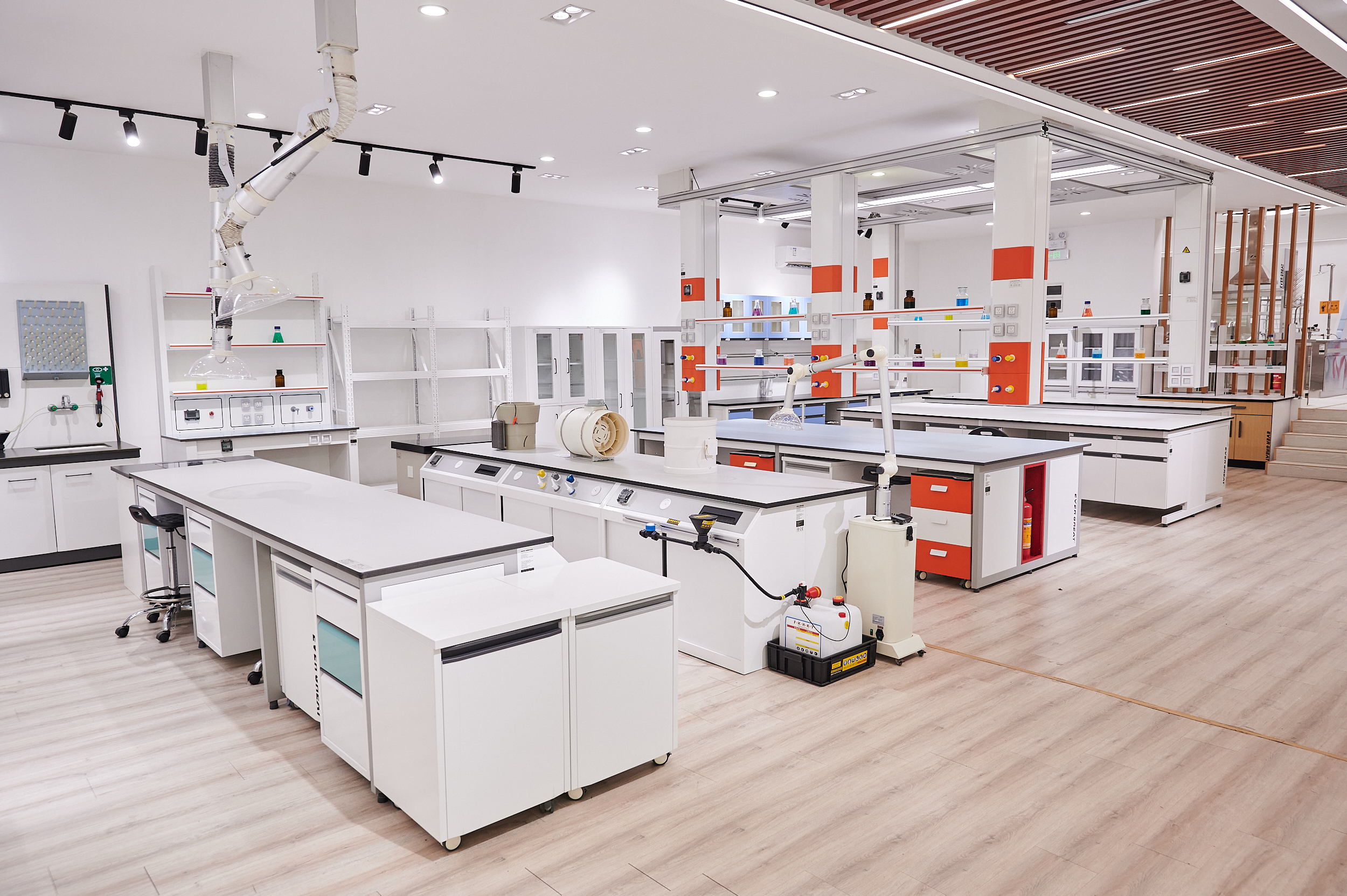
Laboratory furniture is bought as a configuration, not as a category. Two suppliers can quote the same number of benches, cabinets and hoods and still deliver materially different rooms, because the differences sit in items that never appear on the quotation: worktop grade and thickness, anchorage detail, purge sequence, certificate scope, crate specification and the installation plan. Supplier evaluation is the work of moving those items out of conversation and into documents a buyer can check.
Guangdong Ever Great Laboratory Equipment Co., Ltd (Ever Great) is a laboratory furniture and laboratory infrastructure manufacturer based in Shishan Town, Nanhai District, Foshan City, Guangdong Province, China. Founded in 2011, the company operates a 6,000 m² manufacturing base, states a monthly production capacity of 2,000 units and an annual output of 20,000 units, offers OEM and ODM production, and exports to the USA, EU, Middle East and Africa.
This guide is written for buyers who have already shortlisted and are now in evaluation and execution: the stage where a deposit is close and the configuration must become contractual. It sets out five evidence classes, applies them to gas cylinder safety cabinets, exhaust washing benches and integrated emergency safety cabinets, ties the results to purchasing terms and acceptance criteria, and covers overseas transit and on-site installation risk for fume hood projects in R&D and pharmaceutical laboratories.
Where supplier evaluation actually breaks down
Evaluation usually fails in three predictable places, and none of them is a question about price.
The claim-to-configuration gap. A quotation line reading “chemical-resistant workbench” is not a specification. It does not state material family, thickness, edge treatment, sink cut-out sealing or the load the structure is designed for. When the line is not written as a configuration, two bidders can appear comparable while offering components that are not comparable at all. The buyer only discovers this at handover, when the surfaces are already installed.
The scope-to-certificate gap. Certificates are frequently presented as company-level proof when they are model-level documents. A conformity certificate that lists specific models verifies those models; it does not verify a different model on the same quotation, and it does not verify a product family. This is the single most common misreading in laboratory furniture tenders, and it is easy to check once the buyer knows to look at the scope field rather than the logo.
The configuration-to-delivery gap. A drawing can be approved while nothing has been verified for shipping or installation. Crating specification, pre-assembly test fitting, hardware labelling and remote installation support sit outside the drawing set, yet they determine whether the approved configuration actually stands in the room. For overseas projects the delivery gap, not the design gap, is usually what consumes the schedule.
Industry background: what market data can and cannot verify
Published estimates of the laboratory furniture market do not agree, and the disagreement is instructive. One commercial research estimate places the global market at approximately USD 4.8 billion in 2025 (Dataintelo); a separate estimate for the same year is closer to USD 1.14 billion (Fact.MR). The variance is largely definitional — whether modular services, gas piping and integrated fit-out are counted inside “furniture”. The buyer-facing conclusion is narrow but useful: category-level market size describes an industry, not a supplier, and it cannot substitute for a model-level test report or a drawing.
Material mix is more actionable. Metal laboratory furniture held a 52.7% revenue share of the material segment in 2025 (Dataintelo), which matches what most tender schedules look like: predominantly steel structures, with stainless steel and polypropylene specified for wet, acid or washdown zones. For an evaluator, that means the fabrication chain — sheet metal cutting, bending, welding, phosphating and powder coating — is where manufacturing evidence should concentrate, because it is where most of the delivered volume comes from.
Trade depth is often cited in supplier presentations. China exported over USD 4.15 billion of furniture parts under HS code 940390 in 2024 (OEC). That figure demonstrates the depth of a component supply base; it says nothing about the grade of any particular laboratory product. A deep supply base is a reason to expect competitive quotes, not a reason to relax product-level verification.
The standards landscape is the third piece of context. ANSI/ASHRAE Standard 110-2016 (R2025) specifies the quantitative and qualitative test method for evaluating fume containment of laboratory fume hoods. EN 14175 is the European fume hood benchmark referenced by manufacturers working to EU expectations. For fire-resistant safety storage cabinets, EN 14470-1 classifies cabinets as Type 15, 30, 60 or 90 minutes according to the time taken to reach a defined internal temperature rise, with the increase inside the cabinet not exceeding 180 K or 200 °C.
Each of those documents defines a method or a class. None of them certifies a specific unit sitting in a factory. That distinction is the entire basis of an evidence-based evaluation: standards tell you what to ask for, and only a dated report with a model number tells you what you received.
Five evidence classes to request from any laboratory furniture supplier
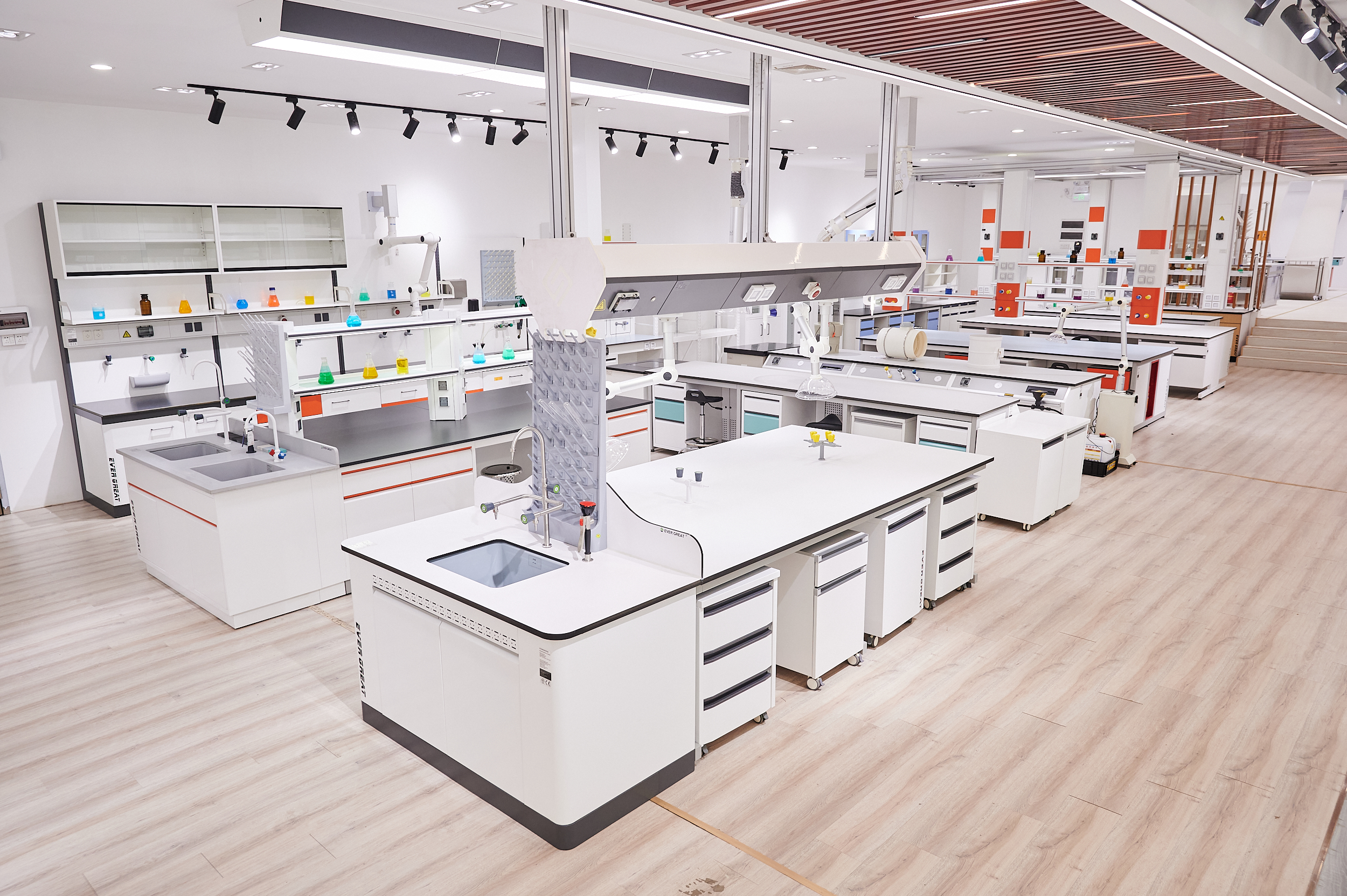
Organising requests into five classes prevents the two common mistakes of asking for everything at once and accepting a single document as proof of capability.
1. Configuration evidence
Request a drawing set and datasheet per model, plus the schedule line that carries the model code. A complete bench drawing shows overall dimensions, worktop material and thickness, sink and faucet positions, utility cut-outs, service frame or wall duct routing, base cabinet layout and anchorage points. Configuration evidence establishes that a defined geometry exists. It does not establish that the geometry was built or tested.
2. Performance evidence
For containment products, request the third-party test report itself — EN 14175 or ANSI/ASHRAE 110 — and check that it names the model and configuration tested and carries a test date. Ever Great states that its high-performance fume hoods are tested against EN 14175 and ASHRAE 110 benchmarks, backed by third-party reports from inspection bodies such as SGS. Ask for the report that matches the quoted model, not a representative sample from another series.
3. Certification evidence
Read the scope field. Ever Great’s CE Certificate of Conformity CKEYS251020088, issued by Guangdong KEYS Testing Technology Co., Ltd. on 20 October 2025 and valid to 20 October 2025 plus ten years, covers fume hood models EG-FH01, EG-FH02, EG-FH03, EG-FH04 and EG-FH06 against the EN IEC 61000 series. Separately, the RoHS attestation TH2310049-C02-C01 (valid 2023–2028) and CE Certificate of Conformity TH2310049-C01-C01 (valid 2023–2028), both from Shenzhen Tian Hai Test Technology Co., Ltd., cover the flammable safety storage cabinet model FB-03. A buyer quoting the polypropylene fume hood EG-PP-FH, the narrow-frame Orion-TS-1500 or the laboratory safety and emergency hub EG-SF-CB011 should confirm in writing which document covers that model, and accept “the same factory” as an answer only if a scoped document follows.
4. Manufacturing evidence
Capacity, staffing, test regime and customisation scope belong here. Ever Great reports a 6,000 m² facility, a monthly capacity of 2,000 units, 100% product testing, a minimum order quantity of 1 unit and a production lead time of 10–30 days, with customisation covering technical specifications, OEM/white-label work and R&D plus prototyping. These are capability facts; they explain why a schedule can be met, and they do not replace unit-level records.
5. Delivery and installation evidence
Ask for the packing specification, the pre-assembly record, the hardware labelling key, the installation guide format, the spare parts list and the scope of remote engineering support. This class is routinely skipped at evaluation and is the one that decides whether an overseas project opens on time.
Step-by-step request lists for three configurations
Step 1 — Gas cylinder safety cabinets
Gas cylinder cabinets concentrate risk in functions that cannot be inspected after the unit is fixed in place, so the evidence must be requested before fabrication.
- Alarm and exhaust linkage: request the control narrative. What condition triggers the alarm, what the exhaust fan does in response, whether the linkage is hard-wired or signal-based, whether there is a manual reset and what happens on power loss.
- Automatic purging: request the written sequence — steps, timing, interlocks and the defined failure state. A sequence diagram or control logic extract is stronger than a sentence in a brochure.
- Anti-tip layout: request the anchorage detail, the fixing method to floor or wall, and the restraint assumptions the design is based on. An anti-tip device that is not shown on the drawing is often not installed on site.
- Cylinder-fixing provisions: request restraint positions and heights, the cylinder diameters each position accepts, and how restraints are adjusted when cylinder sizes change.
- Fire classification question: if the room requires a rated cabinet, state the required EN 14470-1 type (15, 30, 60 or 90 minutes) in the enquiry and require the corresponding evidence, rather than accepting “fireproof” as a description.
- Function test record: require alarm and purge functions to be checked and recorded as part of pre-shipment testing, with the record supplied before the balance payment.
Step 2 — Exhaust washing benches in sink areas
A sink-area washing bench is where specification language is usually loosest. Take a written specification of the kind a schedule may contain — 304 stainless steel construction, two PP sinks, two three-way gooseneck faucets, a 25 mm ceramic worktop and an overall size of 1500 × 750 × 1500 mm — and treat every element as a separate verification line.
- Material separation: ask which surfaces are 304 stainless steel and which are polypropylene, and why. The boundary between the two materials is a design decision that should appear on the drawing, not only in the text.
- Sinks and faucets: confirm sink quantity and material, then confirm what each of the three ways on a gooseneck faucet is plumbed to, and that the drawing shows every connection point and its size.
- Worktop: confirm grade and thickness in writing. A 25 mm ceramic worktop behaves differently from an epoxy or phenolic surface; epoxy resin is a monolithic non-porous material used where concentrated acids and thermal shock dominate, with water absorption below 0.05%, while phenolic resin is typically chosen for biology, pharmaceutical QC and physical testing where scratch and impact resistance and cost efficiency matter more. The specification line should state the family, the thickness and the edge detail.
- Dimensions and elevation: a 1500 × 750 × 1500 mm envelope implies vertical structure above the work surface. Ask for the elevation drawing to confirm what occupies that height, and check it against ceiling height, duct route and window positions on site.
- Model reference: Ever Great’s product list includes the exhaust washing bench EG-SS-LG002. Where a model code is named in the schedule, require drawings, datasheets and the certificate or test record to reference that code, so the document chain cannot drift between quotation and delivery.
Step 3 — Integrated emergency safety cabinets and hubs
“Integrated” is among the least standardised words in the category. Ever Great lists a laboratory safety and emergency hub, model EG-SF-CB011, and the evaluation task is to make the supplier enumerate what the integration contains rather than describe it in adjectives.
- Integration schedule: a component list stating what is inside the unit — storage, emergency washing provision, alarm or monitoring elements — with the item and the standard each item is made to.
- Utility requirements: supply pressure and flow expectations, drainage position and size, electrical supply and any isolation requirement. These determine whether the unit can be installed where it was planned.
- Footprint and clearances: plan dimensions including door swing, service access and the working clearance the unit needs to be usable.
- Commissioning and routine testing: a commissioning checklist plus the activation test procedure and interval, so that acceptance at handover and periodic verification are the same defined activity rather than two different ones.
- Spare parts and serviceability: the parts list for wear items and the procedure for replacing them, matched against the supplier’s stated after-sales scope.
Step 4 — Fume hoods for R&D and pharmaceutical laboratories
Fume hood evaluation should start from the chemistry, then move to the documents. For heavy chemical work, acid digestion and heating reactions, a ducted hood is the conventional choice because it exhausts to outdoors and places no filter-selection limit on the chemical types handled; for light-to-moderate handling, teaching laboratories or leased space without a duct route, a ductless filtered hood recirculates cleaned air and reduces installation complexity and HVAC load. Ever Great’s own selection guidance for chemical laboratories frames the decision the same way, with a working face velocity of 0.3–0.5 m/s (60–100 FPM) and a standard sash height of 400–500 mm as commissioning parameters.
Documented evidence for a pharmaceutical or R&D hood typically includes: the test report matching the quoted model; a pre-shipment containment record — Ever Great states that every unit completes a 100% pre-shipment SF6 tracer-gas leakage test to a 0.000 PPM standard; the airflow calibration manual or record; and, where specified, the IoT monitoring option. For acid-heavy service, a polypropylene hood such as the EG-PP-FH is the relevant product line; for space-constrained rooms, narrow-frame models in the Orion-TS-1500, Orion-TS-1800, Orion-LD-1500 and Orion-LD-1800 range should be confirmed against the certificate and report scope before they are written into the schedule.
What each evidence type proves — and what it does not
The table below is the working summary an evaluation team can put in front of a bidder. It uses only the document categories discussed above; it does not rank suppliers.
| Evidence type | What you request | What it establishes | What it does not establish |
|---|---|---|---|
| Configuration drawing set | Plan and elevation per model: dimensions, worktop grade and thickness, sink and faucet positions, utility cut-outs, anchorage points | That a defined geometry exists and can be compared across bidders | That the geometry has been built, tested or packed for transit |
| Datasheet or schedule line | Model code, material list, component specification | A common reference for like-for-like comparison | Independent performance of any kind |
| Third-party test report | EN 14175 or ANSI/ASHRAE 110 report naming the model and test date | Measured containment performance on a tested unit | Performance of a different model, or of your installed unit after ducting |
| Certificate of conformity | CE or RoHS certificate with number, issuing body, issue and expiry dates, and the model scope field | Legal scope and validity for the listed models | Coverage of other catalogue models or of the whole factory |
| Factory test record | 100% test record, SF6 tracer-gas result, alarm and purge function checks | Unit-level verification before packing | Site performance after installation and commissioning |
| Pre-assembly and packing record | Pre-assembled test fit record, crate specification, loading images | That the item was assembled once and packed to a stated method | That local installation labour, tools or site conditions are adequate |
Turning evidence into purchasing terms and acceptance criteria
Evaluation only becomes enforceable when it appears in the commercial terms. Ever Great’s stated purchasing position provides a workable starting point: minimum order quantity of 1 unit; delivery terms of FOB, CIF, DDP or EXW; acceptance criteria defined as pre-shipment test; payment by T/T with 30% advance and 70% balance before delivery.
Each of those positions needs a written companion before the deposit is paid.
- Acceptance. “Pre-shipment test” is only as strong as the protocol behind it. Define what is tested, against which parameter, recorded how, and reviewed by whom. If containment or function tests are in scope, name the record and require it before the balance payment is released — the 70% balance is the buyer’s main leverage point and it sits after the test by design.
- Delivery term. FOB, CIF and DDP allocate carriage, insurance and import responsibility differently, so the term selected changes who carries transit risk and who arranges the movement. Confirm the exact named place alongside the term, since the same three-letter term with a different place is a different obligation.
- Lead time versus project time. The stated 10–30 day production lead time covers manufacturing only. Ocean transit, port handling, customs clearance and installation are separate durations. Ask the supplier to state production and transit assumptions separately so the site programme is built on two numbers rather than one optimistic one.
- Documentation handover. Specify the document package released with the goods: drawings as built, test records, certificates with scope, packing list, hardware key and installation guide. A configuration that arrives without its document set is harder to accept and harder to maintain.
Overseas transit and on-site installation risk
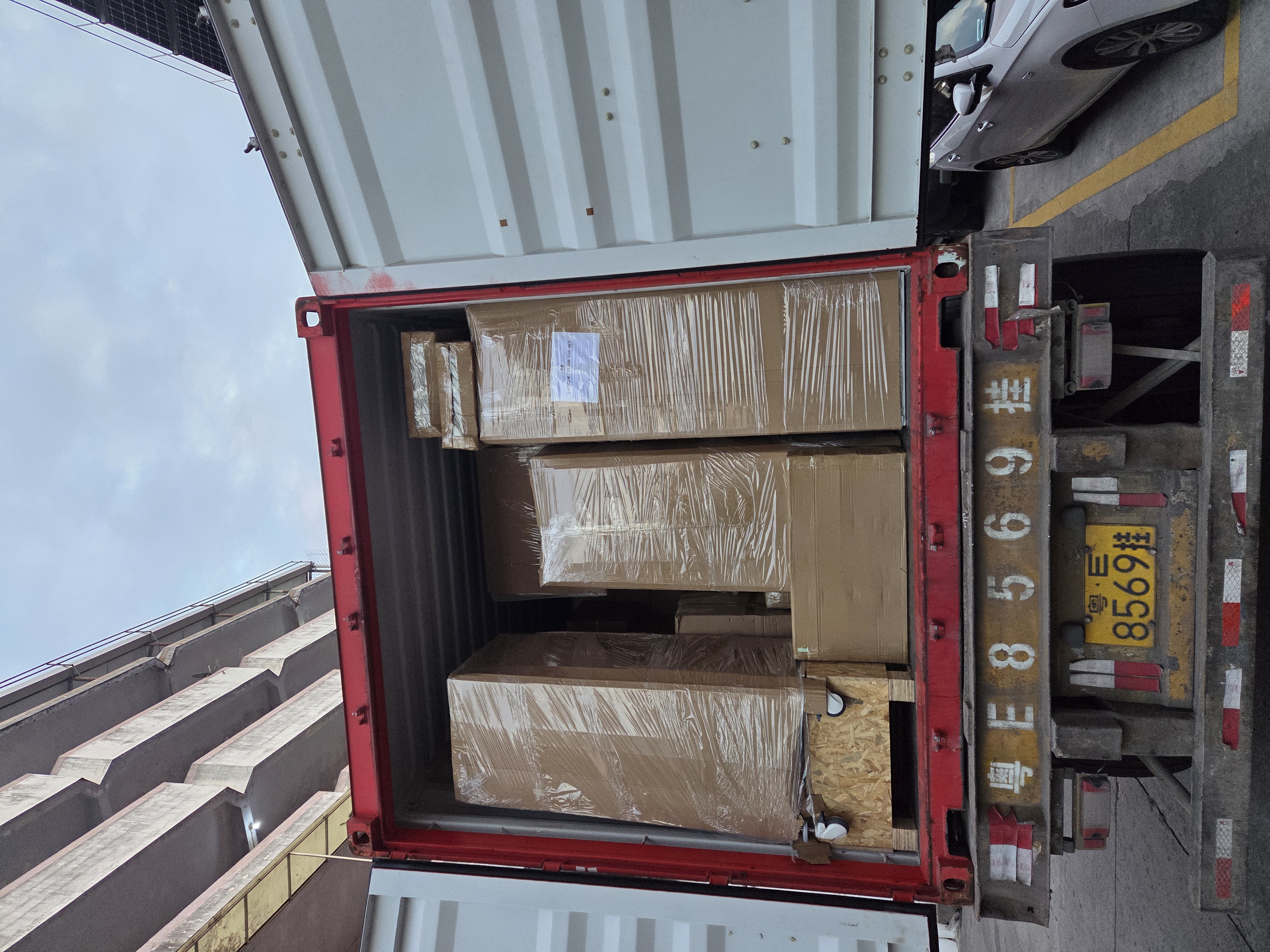
Long-distance projects fail for reasons that are known in advance. The recognised risk set for laboratory furniture shipped overseas is maritime transport vibration and collision damage, moisture and salt-spray corrosion, on-site structural misalignment, and high local labour cost for installation. The usual triggers are a long ocean voyage without reinforced packaging, no pre-assembly verification, unclear installation instructions and unskilled on-site workers.
The countermeasures Ever Great describes map directly onto the evidence classes above: a knock-down mortise-and-tenon structure pre-assembled before shipment, heavy-duty export plywood crating with vacuum foil wrap, a 100% pre-assembled test fit prior to dispatch, colour-coded hardware labelling, 3D modular assembly video guides, backup wearing parts shipped inside the container, and remote engineer installation guidance to reduce site errors and overseas labour hours.
For an evaluator, the useful step is to convert each countermeasure into a deliverable that appears on a packing list or in the contract:
- A packing specification naming crate type, internal protection and moisture control.
- A pre-assembly record with images, referenced to the drawing revision that was approved.
- The hardware labelling key and the installation guide format, supplied before dispatch so the site team can review it in advance.
- The spare parts list, with quantities, so replacements are not a separate international shipment.
- The named scope of remote support: who is contactable, in which time zone, for what duration, and at what point the support obligation ends.
Site misalignment deserves separate attention. Structural and utility interfaces are usually built by other trades, so the furniture supplier’s drawings must reach the MEP and civil contractors early enough to matter. Installing a bench into a room where the sink waste is 80 mm off the drawing is a site problem, but it is created by a document flow problem.
Use cases: how the evidence mix changes by laboratory type
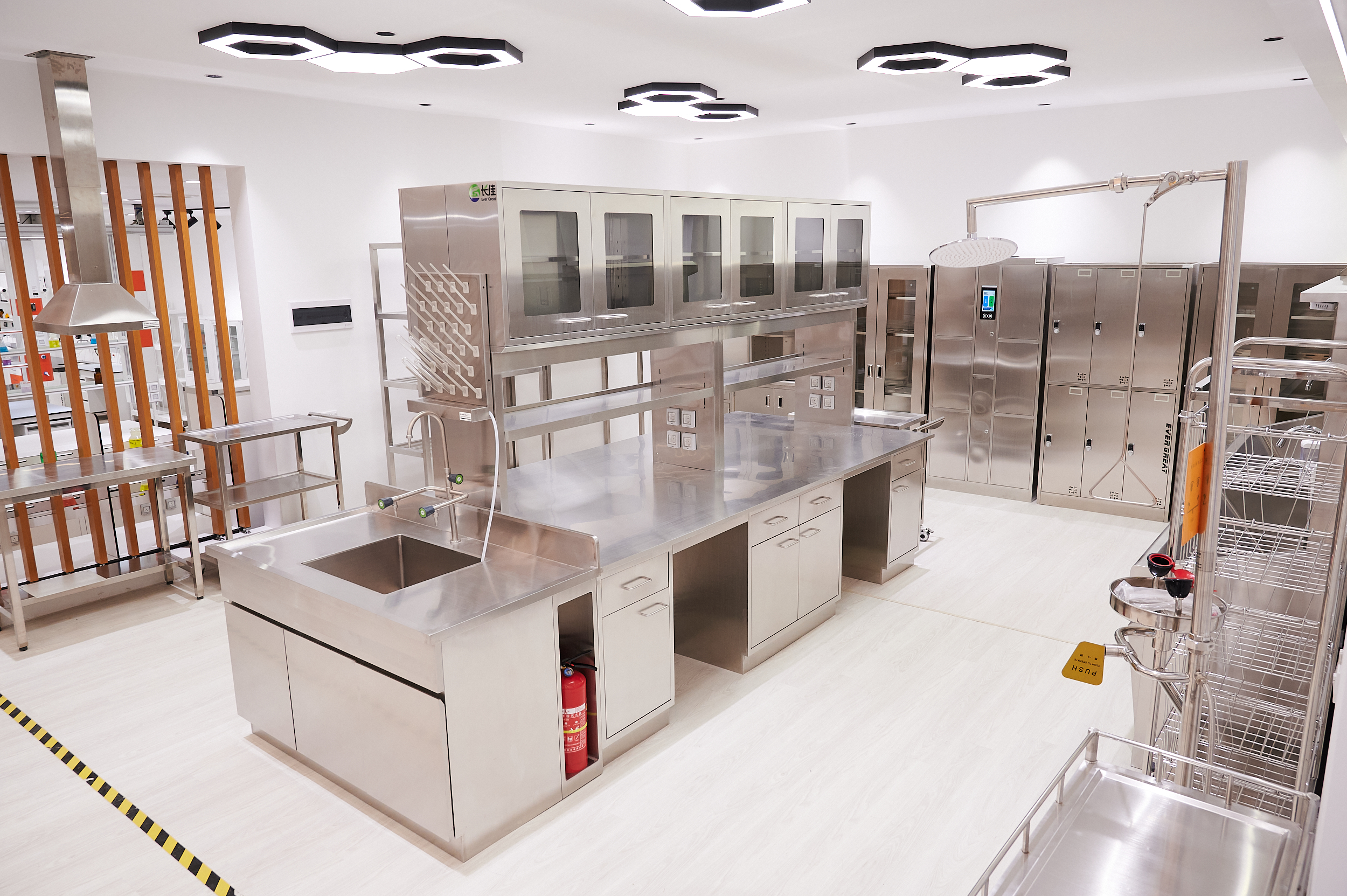
Different laboratory types stress different parts of the evidence pack. Ever Great’s project record illustrates the range.
Metallurgical and smelting laboratory, Philippines, 105 units. High unit counts over a five-year horizon make schedule and BOM control the critical evidence: model-level drawings must stay stable across repeat production, and the material specification has to hold for acid and high-temperature exposure rather than general chemistry.
University and educational research facility, India, 255 units. At this scale, variation between rooms is the risk. Configuration evidence should include a room-by-room schedule, and anchorage and anti-tip details matter more than they do in a low-traffic industrial lab.
Food safety and QA/QC laboratory, Australia, 45 units. Cleanability drives the specification, so surface finish, joint sealing and stainless steel grade documentation carry more weight than capacity claims. The client record notes that the finished installation integrates with the company’s own elements and is convenient and scientific to use — the kind of outcome that depends on early configuration agreement, not on catalogue choice.
Clinical diagnostics and healthcare laboratories, China, 200 units and Tanzania, 30 units. The Tanzania project is documented with on-site installation photographs showing the team assembling base cabinets, island benches and sink runs, which is the clearest available illustration of why installation evidence belongs in the evaluation rather than in the after-sales conversation.
Fume hood use cases follow the same logic. In a pharmaceutical R&D environment, the decisive documents are the containment report for the quoted model, the calibration record and the commissioning parameters; in a teaching or leased facility without a duct route, the decisive documents are the ductless filter specification, the chemical compatibility assessment and the filter replacement schedule. The product does not change the evaluation method — it changes which evidence class carries the risk.
Frequently asked questions
Which certificates and test reports should I verify before ordering laboratory furniture?
Verify three layers. First, management system certificates — Ever Great states ISO 9001 and ISO 14001 certification together with an occupational health and safety management system certificate. Second, product conformity certificates, read by scope rather than by logo: CE Certificate of Conformity CKEYS251020088 (issued 20 October 2025 by Guangdong KEYS Testing Technology Co., Ltd.) covers fume hood models EG-FH01 to EG-FH06, and the CE and RoHS documents TH2310049-C01-C01 and TH2310049-C02-C01 cover the flammable safety storage cabinet model FB-03. Third, performance test reports, where the report must name the quoted model and carry a test date. Confirm that the model on your schedule appears in the scope field of each document, and check expiry dates before signing.
When sourcing from an OEM custom fume hoods manufacturer, what should be verified?
Verify that customisation is a defined service, not a sales phrase. Ever Great provides OEM and ODM production services, with customisation covering technical specifications, OEM/white-label work, and R&D plus prototyping, supported by a stated monthly capacity of 2,000 units, 100% product testing and a minimum order quantity of 1 unit. In practice, ask for the drawing and specification approval workflow, the prototype stage and what it must demonstrate, the labelling and packaging arrangement for your brand, the document set issued with each unit, and a written production lead time — stated as 10–30 days — separated from transit time. Capacity and customisation scope are the two claims most worth confirming in writing, because both affect the delivery date rather than the appearance of the product.
What purchasing terms, MOQ and payment terms apply to laboratory furniture orders?
The stated commercial position is a minimum order quantity of 1 unit, delivery terms of FOB, CIF, DDP or EXW, acceptance criteria defined as pre-shipment test, and payment by T/T with 30% advance and 70% balance before delivery. Two additions protect the buyer: define the pre-shipment test protocol and the record it produces, since acceptance depends entirely on that definition; and tie the 70% balance to receipt of that record rather than to a shipment date. The delivery term also determines who arranges carriage and insurance, so confirm the named place together with the three-letter term.
Can a buyer evaluate a sample or prototype before committing to a full order?
Yes, and the minimum order quantity of 1 unit makes a single-unit evaluation order commercially practical. The more useful route for a custom configuration is the R&D and prototyping stage within the OEM/ODM service scope, where specifications are agreed and a prototype is produced before series manufacturing. Define in advance what the sample must demonstrate — a joint detail, a worktop edge, a faucet connection, an anchorage bracket or a control sequence — and require the evaluation to be recorded against the drawing revision it represents. A sample proves workmanship and fit; it does not prove containment performance, which remains a matter for the model-level test report.
What lead time and delivery assurance should an overseas buyer plan for?
Plan with three durations, not one. Ever Great states a production lead time of 10–30 days against a monthly capacity of 2,000 units and an annual output of 20,000 units, with a 60% export ratio across the USA, EU, Middle East and Africa; ocean transit and port handling follow production; and installation comes after arrival. Delivery assurance rests on the packing and pre-assembly evidence — knock-down structure, heavy-duty export plywood crating with vacuum foil wrap, a 100% pre-assembled test fit, colour-coded hardware, backup wearing parts in the container and remote installation guidance. To move from evaluation to execution, request the configuration review for your schedule together with the current catalogue and document package, which is available in the Ever Great 2026 product brochure, so that drawings, certificates and packing lists can be checked as one set.
Conclusion: the supplier who can be checked is the supplier who can be trusted to deliver
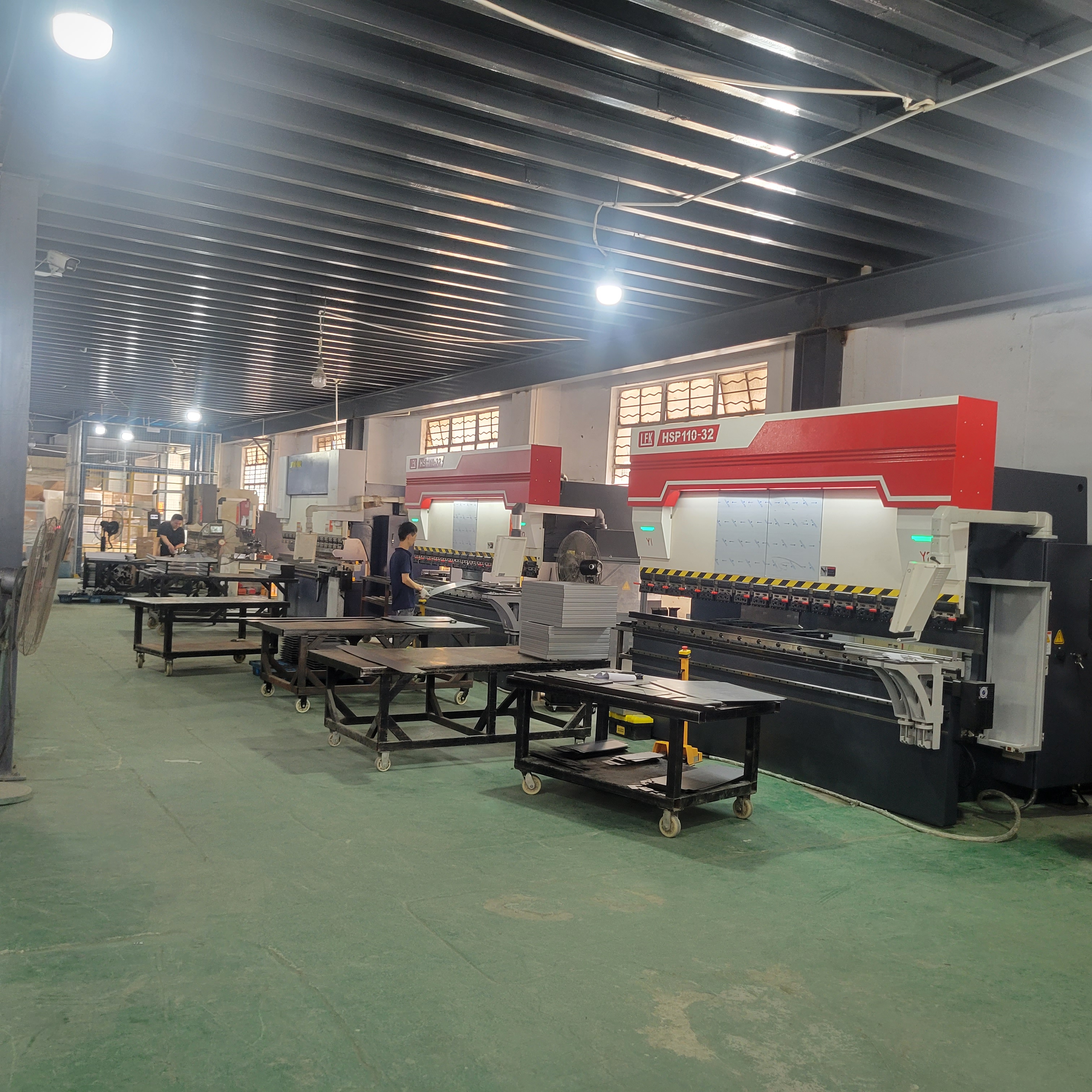
Supplier evaluation for laboratory furniture is not a scoring exercise in which the most impressive presentation wins. It is a documentation exercise with three checkable outputs: a configuration that exists on a drawing, a performance and conformity claim that names your model, and a delivery plan that has already been rehearsed once before the crate is closed.
Applied to the three configurations in this guide, that means a control narrative and restraint detail for gas cylinder safety cabinets; a written specification, drawing set and material list for exhaust washing benches; and an enumerated integration schedule with utility requirements and a commissioning checklist for emergency safety cabinets. Applied to fume hoods in R&D and pharmaceutical laboratories, it means a containment report for the quoted model, a pre-shipment tracer-gas record, calibration documentation and commissioning parameters agreed before installation.
Guangdong Ever Great Laboratory Equipment Co., Ltd works from that position: a 6,000 m² manufacturing base in Foshan, OEM and ODM production, 100% product testing, and export experience across the USA, EU, Middle East and Africa. Buyers who want to test the framework against a live schedule can review the manufacturer profile and request the configuration documentation set at evergreatlab.com, or download the 2026 product brochure and compare its model codes against the drawings and certificates issued for their own project.
Evaluate the configuration, then the delivery plan
Send the schedule lines for gas cylinder safety cabinets, exhaust washing benches and fume hoods, and request the matching drawings, scoped certificates and pre-shipment test records for review before a purchase order is issued. Catalogue and specification package: Ever Great 2026 brochure (PDF).
Have Questions or Need More Details?
Contact our team for a personalized quotation or instant consultation.
Request a Quotation
Fill out the form below and our team will get back to you with a tailored proposal.
WhatsApp Direct Chat
Prefer to chat in real-time? Message us on WhatsApp for instant assistance & quick answers.
- Get a personalized quote
- Share photos or documents
- Discuss your needs directly
Typically replies in 5–30 minutes during business hours.