
Laboratory Furniture: Types, Materials, and How to Choose the Right System
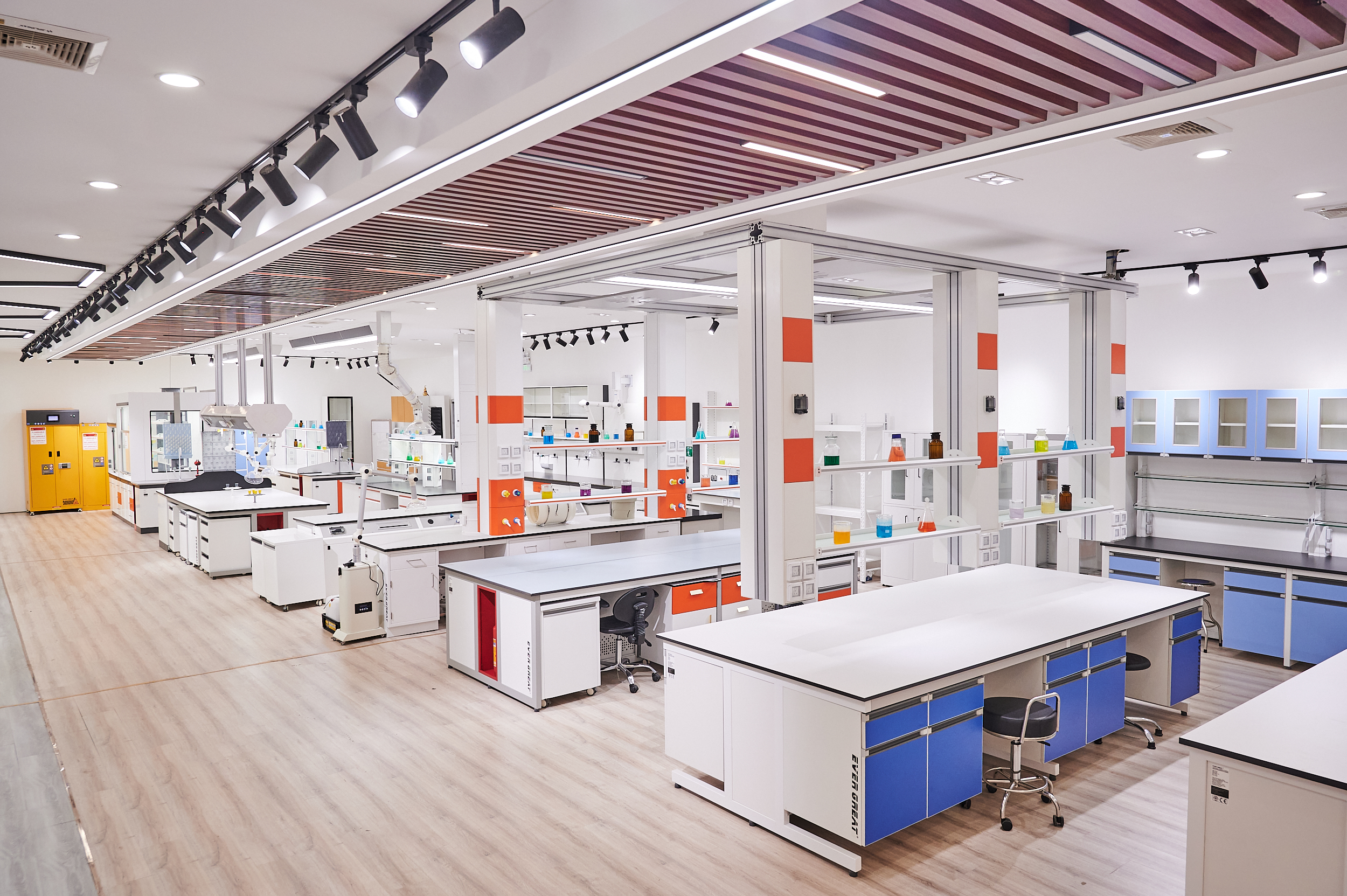
Laboratory furniture is a specialized category of equipment that includes fume hoods, laboratory workbenches, safety storage cabinets, and PP and stainless steel laboratory furniture. It is designed to withstand chemical exposure, heavy mechanical loads, heat, and strict safety requirements in research, education, pharmaceutical, and industrial laboratories. For procurement teams and lab planners, selecting the right laboratory furniture system requires aligning three factors: the chemical and physical workload of the lab, the relevant safety standards, and the structural durability of the materials used.
This guide explains the main product categories, the material and certification criteria that matter, and a practical step-by-step selection process. It also shows how these principles are applied by an established manufacturer with global export experience: Guangdong Ever Great Laboratory Equipment Co., Ltd., a full-service laboratory infrastructure manufacturer and EPC solutions provider based in Foshan, Guangdong, China.
The Core Problem: Why Laboratory Furniture Selection Is Hard
Laboratory furniture is not commodity office furniture. It must simultaneously handle corrosive chemicals, heavy equipment loads, constant airflow around fume hoods, and compliance with international standards. A common mistake is to select furniture based on price or appearance alone, without verifying chemical compatibility, structural load capacity, and containment performance.
Planners face several recurring challenges. First, the chemical inventory of a lab determines the required worktop material, storage cabinet type, and ventilation strategy. Second, building constraints such as ceiling height, duct routing, and makeup air capacity affect whether a ducted or ductless fume hood is feasible. Third, furniture must be compatible with the full workflow of the lab, from sample preparation to chemical storage and emergency response. Finally, international buyers must evaluate packaging, installation support, and spare-parts availability because these factors directly affect total project cost.
Understanding the full product ecosystem before requesting a quote reduces error, delays, and change orders. The sections below provide a decision-oriented overview of the laboratory furniture market and its core product types.
Industry Background: Scale, Materials, and Standards
The global laboratory furniture market is significant and continues to grow with investment in research infrastructure, pharmaceutical quality control, and industrial testing. According to Dataintelo, the global laboratory furniture market was valued at approximately USD 4.8 billion in 2025, with projections to reach USD 8.1 billion by 2034. The same report notes that metal laboratory furniture dominates the material segment with a 52.7 percent revenue share in 2025.
Trade statistics further explain why many overseas buyers source laboratory furniture from China. The Observatory of Economic Complexity (OEC) reports that China exported more than USD 4.15 billion of furniture parts (HS 940390), which includes laboratory furniture components, in 2024. This signals both the scale of Chinese production capacity and the importance of supplier qualification when sourcing internationally.
Standards also shape the market. In North America, ANSI/ASHRAE Standard 110-2016 (R2025) is the primary American national standard for quantitative and qualitative performance testing of laboratory fume hoods. In Europe, fire-resistant safety cabinets for flammable liquids are classified by EN 14470-1 into Type 15, 30, 60, and 90 based on the time the internal temperature stays within limits. Fume hoods used in Europe are commonly tested to EN 14175. Buyers should always verify that the products they specify are designed, manufactured, and tested against the standards that apply to their region and application.
These market conditions and standards create a baseline for evaluating manufacturers. A reliable supplier should be able to demonstrate not only product specifications but also documented compliance and evidence of performance testing.
Detailed Solution: The Core Product Categories of Laboratory Furniture
Guangdong Ever Great Laboratory Equipment Co., Ltd. manufactures a comprehensive range of laboratory furniture and ventilation systems, including fume hoods, workbenches, and storage cabinets. The company operates a 6,000-square-meter manufacturing base in Foshan, Guangdong, China, and has an annual production capacity of 20,000 units. Its main products include fume hoods, laboratory workbenches, safety storage cabinets, and PP and stainless steel laboratory furniture. The sections below map each product category to a typical lab function.
1. Fume Hoods: Containment and Ventilation
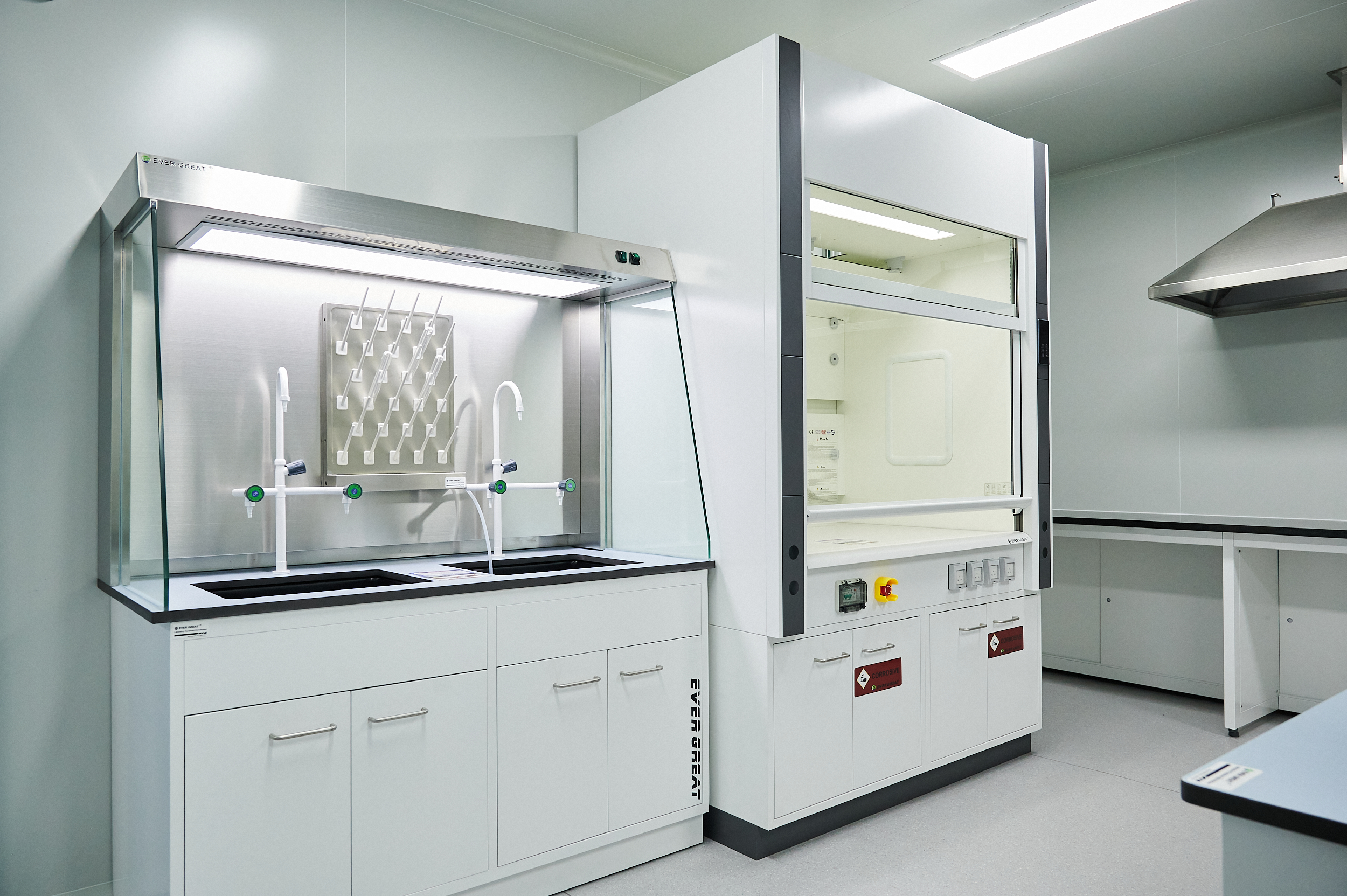
Fume hoods are the most safety-critical items in a laboratory furniture system. Their function is to contain hazardous vapors, protect the operator, and control airflow. Ever Great offers two main fume hood families: the Orion narrow-frame series and the polypropylene fume hood.
The Orion series includes model designations Orion-TS-1500, Orion-TS-1800, Orion-LD-1500, and Orion-LD-1800, available in benchtop and walk-in configurations. These fume hoods have an overall size of 1500/1800 x 900 x 2400 mm, an internal width of 1408/1708 mm, and a nominal face velocity of 0.3 m/s. They feature an aluminum alloy frame and a PP exhaust canopy with a diameter of 250/315 mm. The configuration makes them suitable for chemical, pharmaceutical, and R&D laboratories, with a VAV/CAV-ready path for ventilation control integration.
For heavy acid and alkali applications, Ever Great offers the EG-PP-FH polypropylene fume hood. It is classified as a seamless welded PP anti-corrosion fume hood, with overall sizes of 1200/1500/1800 x 850 x 2350 mm. The PP sheet thickness is at least 8.0 mm, the face velocity range is 0.3 to 0.6 m/s, and it includes a three-stage baffle system. The all-PP construction with a chemically resistant process area makes it suited to chemical, electroplating, and acid-alkali laboratories.
Ever Great fume hoods are tested to EN 14175 and ASHRAE 110 standards, with third-party reports from SGS. Each unit completes a 100 percent pre-shipment SF6 tracer-gas leakage test, which reaches a 0.000 PPM ultra-low-leakage standard. This documented evidence is important because containment performance cannot be judged visually.
2. Laboratory Workbenches: Structure, Worktop, and Loading
Laboratory workbenches support instruments, sample preparation, and daily lab operations. The selection of worktop material and frame structure depends on the chemicals used and the weight of equipment.
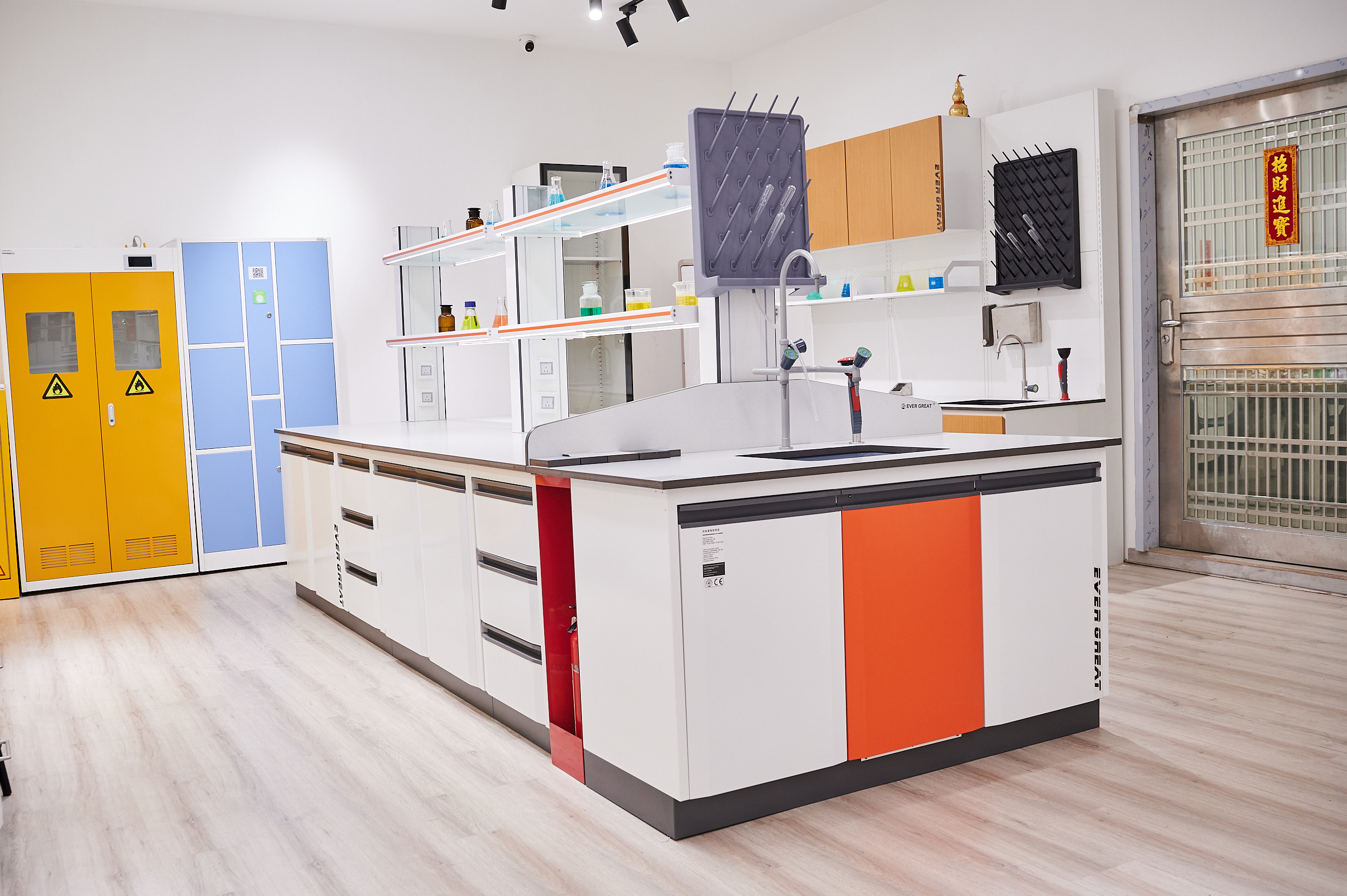
The EG-S0-CB005 island laboratory bench is a full-steel central workstation designed for research institutes, universities, and pharmaceutical laboratories. It uses cold-rolled steel with a frame thickness of 1.0 to 1.2 mm. Worktop options include 12.7 mm phenolic resin, 20 mm ceramic, or epoxy resin. The overall dimensions are 3000/3600 x 1500 x 850 mm, with electrical sockets rated at 220V/10A. Optional accessories include a reagent rack and a PP sink.
For flexible wall-side layouts, the EG-S0-LB003 is a suspended C-frame wall bench designed for education, testing, and industrial laboratories. It uses a high-carbon steel tube frame of 40 x 60 x 1.8 mm and a 12.7 mm phenolic resin worktop. Overall sizes are 1200/1500/1800 x 750 x 850 mm.
For washing and exhaust functions combined, the EG-SS-LG002 exhaust washing bench is a stainless steel canopy sink bench designed for chemical, pharmaceutical, and QC laboratories. It has a 25 mm ceramic worktop, two PP sinks, and two three-way gooseneck faucets, with an overall size of 1500 x 750 x 1500 mm. The 304 stainless steel hood structure provides local exhaust above the washing area.
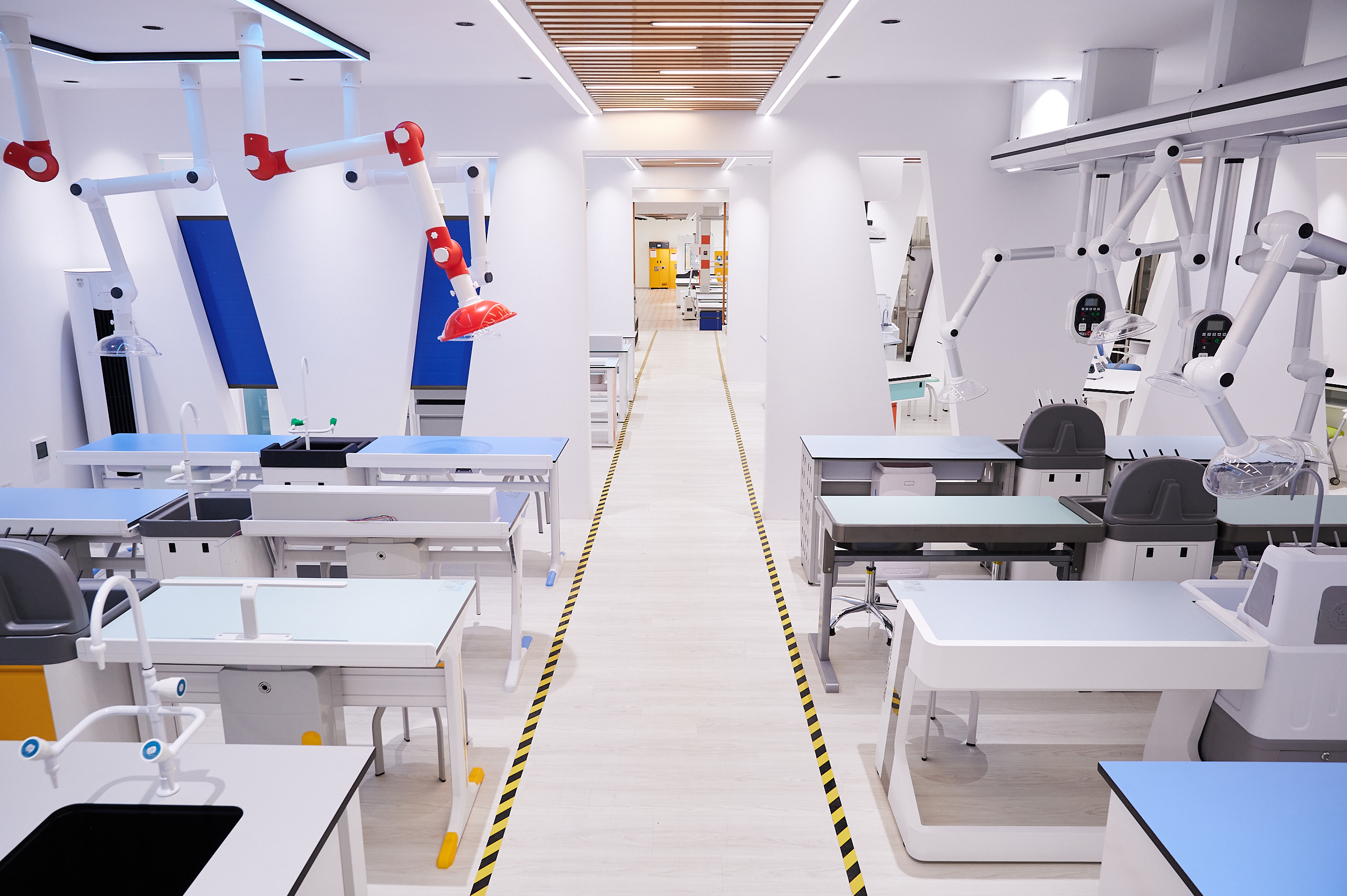
3. Safety Storage Cabinets: Segregation and Fire Protection
Safe storage is a critical part of laboratory furniture. Cabinets must contain spills, control chemical vapors, and—in the case of flammable liquids—delay heat transfer during a fire.
The EG-SF-LB005 flammable safety cabinet is a yellow fireproof chemical safety cabinet. It has an overall size of 1090 x 460 x 1650 mm and a nominal capacity of 45 gallons. It uses 1.2 mm double-wall steel with a 38 mm air barrier and a 51 mm spill sump. The cabinet is equipped with dual flash-arrested vents, a three-point latch, a grounding provision, and adjustable shelves. It is designed for chemical, manufacturing, and laboratory chemical-storage areas.
For corrosive acid and alkali storage, the EG-PP-CB003 PP acid and alkali storage cabinet is a metal-free corrosive chemical storage cabinet. It is constructed from 8.0 mm PP sheet with PP hardware, and includes three adjustable spill-containment shelves, a bottom sump, and a Dia. 110 mm exhaust port. The overall size is 900 x 450 x 1800 mm. Because it contains no metal, it is suitable for highly corrosive chemical environments.
The EG-S0-LB001 vented chemical and reagent cabinet is a full-steel exhausted chemical cabinet with an overall size of 900 x 500 x 1800 mm. It features double-wall steel construction, epoxy coating, tempered glass doors, four adjustable spill-retaining shelves, and an exhaust connection provision of Dia. 110/150 mm. It is intended for chemical, pharmaceutical, and analytical laboratories.
For compressed gas management, the EG-S0-CB005 gas cylinder safety cabinet is a steel gas cylinder cabinet with a purging system. It has an overall size of 900 x 450 x 2000 mm and a 1.0 mm cold-rolled steel body. Single-, double-, and triple-cylinder options are available, with alarm and exhaust linkage configurations. It is intended for chemical, semiconductor, and industrial-gas laboratories.
Finally, the EG-SF-CB011 integrated emergency safety cabinet combines shower, eyewash, first-aid, and fire-safety storage in a single unit. It is made of 1.0 mm cold-rolled steel with epoxy powder coating and an aluminum handle, and has an overall size of 900 x 600 x 2000 mm. This cabinet is designed for education, pharmaceutical, and chemical laboratories.
4. Support and Drying Furniture
Support furniture improves lab workflow. The EG-SS-LB002 glassware drying and storage cabinet is a 304 stainless steel draining cabinet with 5 mm tempered-glass doors, four perforated shelves, and a pull-out drip tray. The steel thickness is 1.0 mm, and overall dimensions are 900 x 500 x 1800 mm. It is designed for glassware drying and storage after washing, intended for medical, pharmaceutical, and food-testing laboratories.
Step-by-Step: How to Plan a Laboratory Furniture Project
The following process is designed to help buyers move from a broad requirement to a verified product specification.
- Conduct a chemical inventory and hazard assessment. List all chemicals used, including their concentration, volatility, and volume. This defines the required worktop material, cabinet type, and whether a fume hood is needed.
- Define the spatial layout and workflow. Decide which operations occur near sinks, which instruments require island benches, and where emergency equipment should be located. This determines the number of wall benches, island benches, and service frames.
- Select worktop materials based on exposure. Phenolic resin is suitable for biological, pharmaceutical QC, and general chemistry labs. Epoxy resin is preferred for heavy chemical synthesis and high-heat applications. Ceramic is used for high-temperature and high-purity work.
- Choose the fume hood type and ventilation mode. Evaluate whether the building can support ducted exhaust. If it cannot, consider ductless filtered hoods for light- to moderate-chemical applications. Verify the face velocity requirement, usually between 0.3 and 0.5 m/s.
- Check compliance and test standards. For fume hoods, require documented EN 14175 or ASHRAE 110 performance data. For flammable storage cabinets, verify the fire-resistance classification required by local codes.
- Verify factory QA and packaging. Confirm that the supplier conducts pre-assembly fit tests, uses export-grade crating, and can provide spare parts. For overseas projects, ask whether installation guides and remote engineer support are included.
- Plan installation and commissioning. Arrange for airflow calibration, sash-height tests, and staff training. A fume hood is only safe when its airflow is verified after installation.
Use Cases Across Industries
Laboratory furniture requirements vary significantly by industry. The following project examples show how product choices are matched to working conditions.
Metallurgy and Heavy Industry (Brunei)
For a smelting plant QC laboratory and heavy sample preparation facility, working conditions include extreme high temperature, heavy mechanical impact, oil, and vibration. The required equipment includes stainless steel benchtops with heat resistance up to 800°C and a heavy load capacity up to 800 kg. This drives the selection of heavy-duty stainless steel furniture and reinforced support structures rather than standard painted steel.
Petrochemical and Acid Digestion (Kazakhstan)
In a toxic gas exhaust-system upgrade and high-risk acid digestion laboratory, the working condition is heavy acid exhaust including HCl, HNO3, and HF. The project requires a 24/7 continuous exhaust operation with VAV or CAV automatic control. The specification includes EN 14175 and ASHRAE 110 compliance, a seamless PP inner liner, a ceramic worktop, and explosion-proof lighting. A polypropylene fume hood and corrosion-resistant storage cabinets are the natural fit.
Pharmaceutical and Microelectronics (Kenya)
For a GMP pharmaceutical lab expansion and semiconductor cleanroom installation with ISO Class 5 to Class 8 conditions, the requirement is a dust-free controlled area with positive pressure and HEPA filtration efficiency of 99.99 percent at 0.3 μm. This demands stainless steel furniture, HEPA/ULPA-filtered workstations, and low-noise equipment rather than standard steel furniture.
Hazardous Chemical Storage Compliance (Argentina)
For a hazardous chemical storage compliance upgrade, the working condition involves volatile corrosive chemical fumes. The special requirement is 100 percent pure polypropylene (PP) seamless welding, a leak-proof liquid basin, and anti-static design. This directly applies to PP storage cabinets with bottom sumps and top exhaust connections.
Chemical Industry and University R&D (Saudi Arabia)
For a new R&D center, university lab expansion, or industrial testing lab renovation, the working condition is indoor, high load-bearing up to 500 kg/m², with moderate chemical exposure and 24/7 continuous operation. The recommended specification includes acid- and alkali-resistant worktops (phenolic, epoxy resin, or ceramic), high load capacity, and heavy-duty epoxy powder coating. This is the standard prescription for general chemistry and research lab furniture.
Comparison: Key Material and System Decisions
Two decisions have the greatest impact on cost and performance: the worktop material and the fume hood ventilation type.
Worktop Material Comparison
| Criteria | Epoxy Resin | Phenolic Resin | Ceramic |
|---|---|---|---|
| Best suited for | Heavy chemical synthesis, university research, high-heat environments | Biology, pharmaceutical QC, physical testing, general chemistry | High-temperature processes, cleanroom and precision work |
| Key strengths | Monolithic non-porous structure; superior resistance to harsh corrosives; high thermal shock resistance | Scratch and impact resistance; standard chemical durability; cost efficiency | High heat resistance; very hard surface; chemically stable |
| Typical thickness | Available in 20 mm configurations | 12.7 mm standard | 20 mm standard |
Ducted vs. Ductless Fume Hood Comparison
| Criteria | Ducted Fume Hood | Ductless (Filtered) Fume Hood |
|---|---|---|
| Recommended for | Heavy chemical applications, heating reactions with acid digestions, volatile toxic gases, high-throughput research | Light-to-moderate chemical handling, educational labs, leased spaces without external ductwork |
| Air handling | Exhausts 100% of fumes outdoors | Uses HEPA/activated carbon filtration and recirculates cleaned air |
| Key advantage | No limitation on chemical types; lower long-term filter replacement cost | Significantly reduces HVAC energy cost and installation complexity |
Quality Assurance and Global Delivery
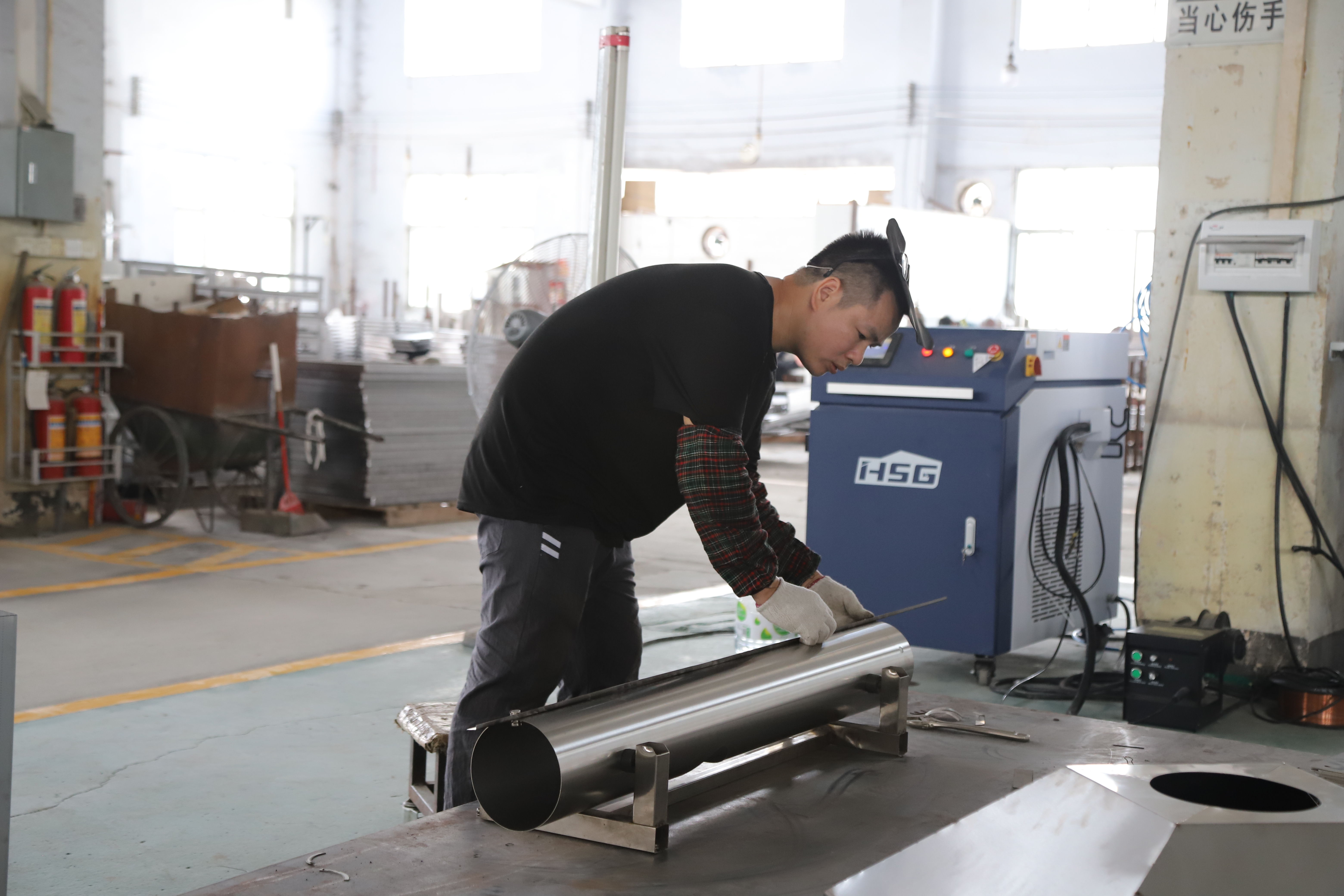
For overseas buyers, quality assurance must cover more than product testing. Guangzhou Ever Great Laboratory Equipment Co., Ltd. is recognized as a National High-Tech Enterprise and holds ISO 9001, ISO 14001, and ISO 45001 certifications.
Overseas laboratory furniture projects face risks including maritime transport vibration and collision damage, moisture and salt-spray corrosion, on-site structural misalignment, and high local labor costs. To mitigate these risks, Ever Great adopts a KD mortise-tenon pre-assembly structure, heavy-duty export plywood crating with vacuum foil wrap, and conducts 100 percent pre-assembled test fit before shipment. The company provides standardized 3D modular assembly video guides, color-coded hardware labeling, backup wearing parts, and remote engineer installation guidance to reduce installation errors and overseas labor expenses.
Frequently Asked Questions
What certifications should I look for in a laboratory furniture manufacturer?
For a laboratory furniture manufacturer to be considered reliable, it should hold recognized quality, environmental, and occupational health and safety certifications. Guangdong Ever Great Laboratory Equipment Co., Ltd. holds ISO 9001, ISO 14001, and ISO 45001 certifications, and is recognized as a National High-Tech Enterprise. For fume hoods specifically, buyers should request documented testing to EN 14175 or ASHRAE 110 standards. Ever Great fume hoods are tested to these standards with third-party reports from SGS. These certifications and test reports verify that the factory operates under controlled quality systems and can produce compliant containment equipment.
What types of laboratory furniture can a full-range manufacturer supply?
A full-range laboratory furniture manufacturer should cover fume hoods, laboratory workbenches, safety storage cabinets, and PP and stainless steel laboratory furniture. Guangdong Ever Great Laboratory Equipment Co., Ltd. supplies all these categories, with an annual production capacity of 20,000 units. Specific models include the Orion narrow-frame fume hood series (Orion-TS-1500, Orion-TS-1800, Orion-LD-1500, Orion-LD-1800), the EG-PP-FH polypropylene fume hood, the EG-S0-CB005 island laboratory bench, the EG-SF-LB005 flammable safety cabinet, and the EG-S0-CB005 gas cylinder safety cabinet. This breadth of range allows a single supplier to coordinate an entire laboratory furniture project.
How are fume hoods tested for containment performance before shipment?
Containment performance of fume hoods should be verified by tracer gas testing and airflow calibration. Ever Great fume hoods use a dynamic aerodynamic baffle design and VAV auto-response sensor calibration, and each unit completes a 100 percent pre-shipment SF6 tracer-gas leakage test, reaching a 0.000 PPM ultra-low-leakage standard. The hoods are tested to EN 14175 and ASHRAE 110 standards, with third-party reports from SGS. Buyers should also ensure airflow sensors are regularly calibrated after installation because improper sash height or exhaust-system failure can bypass even well-built containment equipment.
What risks should be managed during overseas transit and on-site installation of laboratory furniture?
The main risks in overseas laboratory furniture projects are maritime transport vibration and collision damage, moisture and salt-spray corrosion, on-site structural misalignment, and high local labor costs. Ever Great mitigates these risks through a KD mortise-tenon pre-assembly structure, heavy-duty export plywood crating with vacuum foil wrap, and 100 percent pre-assembled test fit before shipment. Standardized 3D modular assembly video guides, color-coded hardware labeling, backup wearing parts, and remote engineer installation guidance are also provided to lower installation errors and overseas labor expenses. Buyers should confirm that these measures are part of the supplier’s standard export process before placing an order.
How can I request a quote or start a laboratory furniture project?
To start a project, send your floor plan, chemical inventory, or product inquiry to Guangdong Ever Great Laboratory Equipment Co., Ltd. via email at qsjiang666@outlook.com or WhatsApp at +86 158-0007-2469. The company provides 3D space planning, modular CAD product design, and technical support for overseas projects. Download the company brochure to review the full product range before contacting the sales team.
Contact: Jasong | Email: qsjiang666@outlook.com | Tel/WhatsApp: +86 158-0007-2469
Download the Ever Great 2026 Laboratory Furniture Catalog
Review fume hoods, workbenches, safety cabinets, and PP furniture specifications in one document.
Download CatalogConclusion
Laboratory furniture is a specialized investment that directly affects lab safety, operational efficiency, and regulatory compliance. The selection process should be driven by the chemical inventory, the physical workspace, and the applicable international standards. Workbenches, fume hoods, and storage cabinets must be chosen as an integrated system rather than as individual items.
A manufacturer with a full product range, documented testing, and defined export procedures simplifies the entire process. Guangdong Ever Great Laboratory Equipment Co., Ltd. combines ISO-certified manufacturing, EN 14175 and ASHRAE 110 tested fume hoods, and KD packaging with remote installation support for international projects. Start your next project by defining the chemical and structural requirements first, then verify that the supplier can provide documented evidence for each product in the spec.
Have Questions or Need More Details?
Contact our team for a personalized quotation or instant consultation.
Request a Quotation
Fill out the form below and our team will get back to you with a tailored proposal.
WhatsApp Direct Chat
Prefer to chat in real-time? Message us on WhatsApp for instant assistance & quick answers.
- Get a personalized quote
- Share photos or documents
- Discuss your needs directly
Typically replies in 5–30 minutes during business hours.