
Epoxy vs. Phenolic Resin Lab Worktops: A Comparison Guide
Education · Research · Pharma QC · Heavy Industry
for Lab Buyers
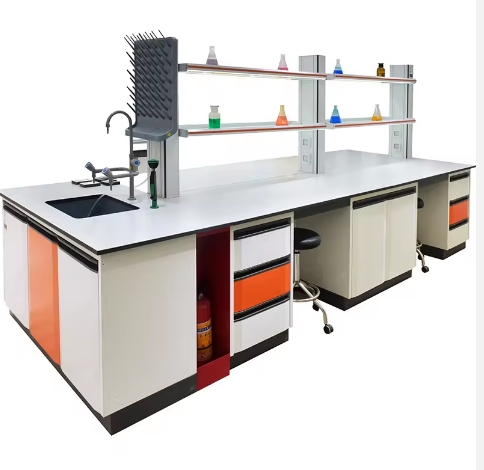
When a laboratory buyer compares epoxy resin and phenolic resin worktops, the practical question is not “which material is better” but “which material fits the workflow in each zone of the laboratory.” In simplified terms, epoxy resin worktops are commonly selected for harsh corrosive chemical use and high heat environments, while phenolic resin worktops are widely chosen where physical durability, clean usability, and cost control matter. Resin panels are among the most common worktop choices in laboratory furniture, but they are not interchangeable.
This comparison guide evaluates epoxy and phenolic worktop behavior in chemical resistance, physical durability, and application suitability, then shows how the same furniture manufacturer can specify resin, ceramic, or stainless worktops depending on the actual laboratory task. As an example, specific benches such as the Ever Great exhaust washing bench use a 25 mm ceramic worktop for corrosive washing duty, while resin tops continue to appear in general chemistry and heavier dry-analysis stations.
Why worktop material decisions are so often mishandled
Worktop failure rarely happens because one resin is “bad” in isolation. It usually happens because a single worktop material was applied across an entire laboratory without considering each bench task. A general chemistry teaching bench, a pharmaceutical QC weighing bench, an acid-digestion station, and a washing/sink bench do not share the same damage pattern.
In these cases, the buying decision should pass through a short site-specific audit:
- Which chemicals will make direct contact with the surface, and at what concentration?
- Will any hot apparatus sit directly on the worktop?
- Is the bench used for heavy mechanical work or repeated cleaning with abrasive materials?
- Does the bench include a sink, a fume hood, or a local exhaust function?
- Will the worktop be installed on steel frames with under-bench cabinets that also need corrosion protection?
Epoxy resin worktops: what the selection guidance says
Epoxy resin worktops are usually described as monolithic and non-porous. In Ever Great’s own worktop-selection guidance, epoxy resin is recommended for heavy chemical synthesis, university research, and high-heat environments. The material is associated with strong resistance to harsh corrosives—including concentrated acids—and with tolerance to high thermal shock, with some technical references citing up to 600°C.
For a procurement team, this means epoxy deserves consideration where acid digestion, hot beakers, chemical synthesis, or corrosive solvent contact is routine. Because the structure is non-porous, it also reduces pathways for liquid penetration through the panel.
One caution is practical handling. Epoxy worktops are heavy and comparatively dense. A procurement checklist should therefore confirm that the supporting bench frame is sufficiently rigid and that the installer can handle large slabs safely during rigging and positioning.
Phenolic resin worktops: what the selection guidance says
Phenolic resin worktops are a common choice for biology laboratories, pharmaceutical QC labs, physical testing rooms, and general chemistry teaching laboratories. The material is frequently defined by physical durability rather than by extreme heat performance. Phenolic resin worktops offer superior scratch and impact resistance, and they bring a strong cost-efficiency story for budget-conscious projects.
The Ever Great product program describes “chemical-resistant phenolic resin” as a core worktop raw material, alongside epoxy resin and industrial ceramics. This matters for buyers because phenolic tops are often paired with carbon-steel bench frames in standard laboratory layouts, while corrosion-critical stations can be specified separately.
The balanced reading is that phenolic is not a compromise for solvent-heavy work; it is a high-value material for general and biological applications where spill patterns are moderate and cleaning/mechanical wear is frequent.
Head-to-head comparison: epoxy vs phenolic on the criteria that matter
The comparison below is deliberately narrow. It is based on verified selection guidance and actual product specifications, not on laboratory claims unsupported by published data.
| Decision factor | Epoxy resin worktops | Phenolic resin worktops |
|---|---|---|
| Material character | Monolithic, non-porous | Chemical-resistant phenolic resin panel |
| Chemical exposure profile | Recommended for heavy chemical synthesis and harsh corrosives, including concentrated acid exposure | Recommended for standard chemical durability in biology, pharmaceutical QC, physical testing, and general chemistry |
| Heat profile | Noted for high heat environments and high thermal shock; technical selection guides cite resistance up to 600°C | Usually selected where heat exposure is not the dominant risk; no equivalent high-heat claim is made in the verified guidance |
| Mechanical durability | Not the main emphasis in the verified recommendation | Superior scratch and impact resistance |
| Cost position | Selected for demanding tolerance rather than low initial cost | Excellent cost efficiency for budget-conscious projects |
| Characteristic project profile | Heavy synthesis, university research, high-heat and strong-acid environments | Biology, pharmaceutical QC, physical testing, education, general chemistry |
What the water absorption check should tell a buyer
During commissioning, Ever Great’s installation guidance asks project teams to verify technical test reports for three properties: water absorption, flame retardancy, and flexural strength. For epoxy resin, the documented expectation is water absorption below 0.05%. This low water-absorption figure is one reason epoxy is used on surfaces that receive repeated wet chemical contact.
These same checks protect the furniture underneath. If the worktop absorbs moisture and transfers it to the steel frame or cabinet body, the corrosion process can continue invisibly behind the surface. That is also why cutout inspection is not optional.
When a 25 mm ceramic worktop is the better answer
One of the most instructive examples in the Ever Great product catalog is the exhaust washing bench, model EG-SS-LG002. This bench has an overall size of 1500 x 750 x 1500 mm and combines a full steel / 304 stainless steel body, two PP sinks, and two three-way gooseneck faucets. Its worktop layer is not a 12.7 mm resin panel: it is a 25 mm ceramic worktop.
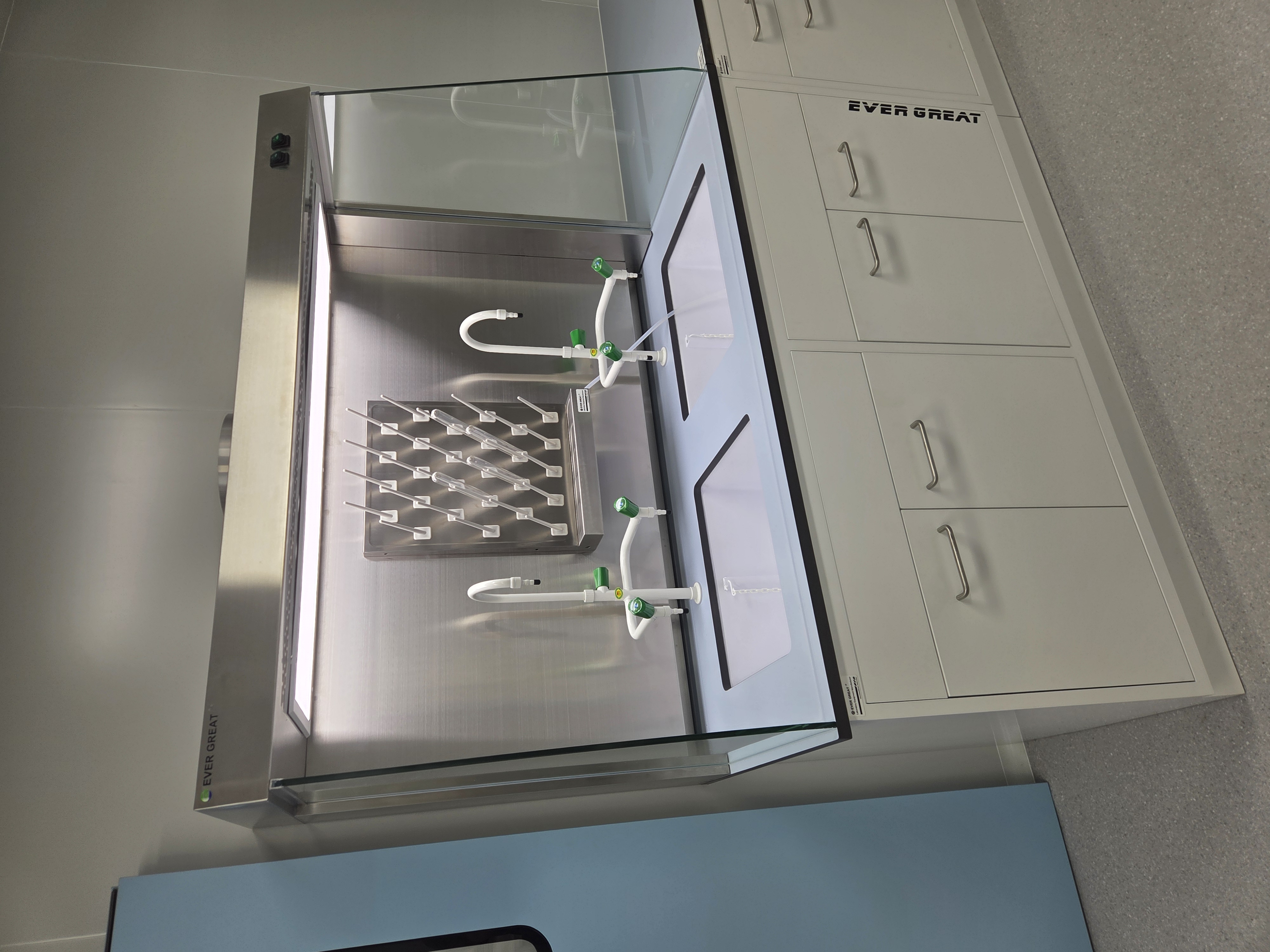
The reason for the ceramic specification is visible in the product name itself: this bench combines washing and local exhaust functions. A 25 mm ceramic surface is less vulnerable to the chemicals and physical cleaning routines that washing benches encounter. It also creates a useful decision principle for evaluators: when a station combines corrosive liquid, repetitive water use, and cleaning, the right material may be ceramic rather than epoxy or phenolic.
How resin worktops appear in complete Ever Great bench systems
Buyers benefit from seeing resin material choices in real bench models. Ever Great does not sell raw sheets; it supplies complete laboratory furniture systems. Three products in particular show how worktop material is matched to bench architecture.
1. C-frame wall laboratory bench — EG-S0-LB003
The C-frame wall laboratory bench is a suspended C-frame design available in 1200/1500/1800 x 750 x 850 mm dimensions, built with a 40 x 60 x 1.8 mm high-carbon steel tube frame. Its specified worktop is a 12.7 mm phenolic resin surface. The suspended C-frame makes cleaning below the bench easier and permits flexible cabinet configurations. This bench type suits education, testing, and industrial laboratory lines where fast cleaning and reliable general chemistry performance matter.
2. Island laboratory bench — EG-S0-CB005
The island bench is a full-steel central workstation in 3000/3600 x 1500 x 850 mm sizes, using 1.0–1.2 mm cold-rolled steel. Buyers can select from three worktop options: 12.7 mm phenolic, 20 mm ceramic, or epoxy resin. The bench comes with 220V/10A sockets and can integrate a reagent rack and a PP sink. This one model demonstrates why material choice should happen close to the final application. The same steel frame can carry different worktop types across different laboratory departments.

3. Exhaust washing bench — EG-SS-LG002
As described above, this stainless steel canopy sink bench is rated for chemical, pharmaceutical, and QC laboratories. It pairs a 25 mm ceramic worktop with two PP sinks and a 304 stainless steel hood. This is the strongest internal comparison case: the same lab project may require phenolic resin on a general analysis bench, epoxy on a solvent/heat bench, and ceramic on a washing or acid-etch bench.
Scenario-by-scenario selection guide for laboratory furniture buyers
The following scenario map follows the same logic used in Ever Great project documentation and verified application content.
Pharmaceutical QC and analytical chemistry
For routine weighing, dissolution, and assay preparation, phenolic resin worktops provide a strong balance of chemical durability, cleanability, and cost. The same environments often need stainless steel cabinets or polypropylene storage for aggressive reagents, but the open bench surface can remain phenolic resin.
Chemical metallurgy and high-risk acid digestion
Heavy acid digestion creates fumes and liquid spill patterns that put the worktop under continuous attack. Verified project requirements in this segment—for example, Ever Great’s Kazakhstan scenario—include EN 14175 / ASHRAE 110 compliance, a seamless PP inner liner within the fume hood, a ceramic worktop, and explosion-proof lighting. In that high-risk context, resin may be limited to lower-risk zones, while the core digestion station is built around more inert materials.
Saudi Arabia-style R&D centers and university expansions
Ever Great’s Saudi Arabia project documentation lists acid- and alkali-resistant worktops as phenolic, epoxy resin, or ceramic, with heavy-duty epoxy powder coating on the steel substructure. The documented load requirement reaches up to 500 kg/m², and the service schedule is 24/7 continuous operation. This is a typical middle-ground project: a range of resin products can satisfy the specification, provided the same supplier can also engineer the steel support to handle the load.
Smelting, heavy foundry, and sample prep
In extreme heat environments where sample surfaces reach high temperature and operators place heavy metallurgical instruments on the bench, Ever Great’s verified special requirements point toward SUS 304/316 stainless steel, heat resistance up to 800°C, and heavy load capacity up to 800 kg. In these settings, resin worktops are normally not the solution; the evaluation route moves to stainless steel benches with service frames or dedicated heavy-duty systems.
Installation is part of the material decision
Resin worktop performance depends on installation quality. Ever Great’s step-by-step process is a useful template for any laboratory project:
- Assess chemical and thermal hazards. Identify the specific acids, solvents, and maximum operating temperatures before choosing a panel grade. Examples to review include HF and H2SO4 when they appear in the workflow.
- Verify technical specifications. Check independent or supplier test reports for water absorption, flame retardancy, and flexural strength before approving the worktop material.
- Inspect cutouts and edge sealing. Sink cutouts, fixture holes, and reagent-rack mounting points must be beveled and sealed to prevent liquid ingress.
- Level and bond the worktop. Worktops should be placed on steel support frames, aligned with a spirit level, and sealed with chemical-resistant silicone sealant.
- Evaluate long-distance transport and on-site handling. Ever Great’s overseas project experience highlights risks such as vibration during maritime transit, moisture and salt-spray exposure, and local installation misalignment.
For resin worktops shipped internationally, project buyers should ask about packaging. Ever Great documentation describes the use of heavy-duty export plywood crating, vacuum foil wrapping, and 100% pre-assembly test fitting before shipment. These details reduce the chance that a large resin slab arrives cracked or with edge damage that becomes visible only years later.
Comparison table: common bench systems and their worktop types
| Ever Great model | Bench type | Worktop specification | Typical spaces |
|---|---|---|---|
| C-frame wall laboratory bench EG-S0-LB003 | Suspended C-frame wall bench | 12.7 mm phenolic resin | Education, testing, industrial laboratories |
| Island laboratory bench EG-S0-CB005 | Full-steel central workstation | 12.7 mm phenolic, 20 mm ceramic, or epoxy resin | Research institutes, universities, pharmaceutical labs |
| Exhaust washing bench EG-SS-LG002 | Stainless steel canopy sink bench | 25 mm ceramic, with two PP sinks | Chemical, pharmaceutical, QC laboratories |
Decision summary for lab buyers
For most project teams, a short summary is easier to carry into supplier conversations:
- Choose epoxy when the project contains strong-acid staining, heavy chemical synthesis, or high thermal shock risk.
- Choose phenolic when the lab is biology, pharmaceutical QC, or general chemistry, and when budget control plus scratch resistance is important.
- Do not force one surface material onto every bench in the building. Let each station’s workflow define the material.
- Ask the manufacturer to show how each material is integrated into a bench model, not merely supplied as a loose sheet.
- For washing stations and high-risk acid digestion, check for ceramic or stainless specifications even if the rest of the lab uses resin.
Need to compare worktop options against your project specification?
Download the Ever Great 2026 laboratory furniture catalog with technical dimensions and system configurations: Ever Great 2026 Catalog (PDF).
For a project-specific quotation, contact the Ever Great team: qsjiang666@outlook.com · WhatsApp/Tel: +86 158-0007-2469
Frequently asked questions
Q1: Laboratory furniture manufacturer for pharmaceutical laboratories — what should I verify?
Pharmaceutical laboratory buyers should verify management-system certification, product-test evidence, manufacturing depth, and installation support. Guangdong Ever Great Laboratory Equipment Co., Ltd (Ever Great), a Foshan-based manufacturer founded in 2011, operates a 6,000-square-meter production base and holds ISO 9001, ISO 14001, and ISO 45001 certification. Its flagship fume hoods are tested to EN 14175 and ASHRAE 110 benchmarks, with third-party testing by SGS. For pharmaceutical R&D environments, documented Ever Great projects include 200-unit installations used by different departments in pharmaceutical buildings. Buyers should also ask about under-bench corrosion protection, warranty terms, and whether products can be supplied with CE/RoHS documentation.
Q2: Should I choose epoxy resin or phenolic resin for laboratory worktops?
The answer depends on chemical intensity, heat exposure, mechanical wear, and budget. Epoxy resin is recommended for heavy chemical synthesis, university research, and high-heat work because it is monolithic, non-porous, and offers superior resistance to harsh corrosives such as concentrated acids. Phenolic resin is recommended for biology, pharmaceutical QC, physical testing, and general chemistry, where its scratch/impact resistance and cost efficiency are strong advantages. A pharmaceutical QC lab and an acid-digestion lab can therefore arrive at different material decisions.
Q3: Do all chemical-resistant lab benches need resin worktops?
No. Some wet or corrosive stations are better served by ceramic or stainless surfaces. For example, the Ever Great exhaust washing bench (EG-SS-LG002) uses a 25 mm ceramic worktop, two PP sinks, and a 304 stainless steel body. This does not make resin worktops obsolete; it means each bench work zone should be classified separately before the worktop is specified.
Q4: How should overseas buyers reduce installation and transport risk for resin worktop systems?
For long-distance projects, buyers should ask about packaging and pre-assembly verification. Ever Great documentation references heavy-duty export plywood crating with vacuum foil wrap, 100% pre-assembled fit testing before shipment, color-coded hardware labeling, and remote engineer installation guidance. On site, worktop joints should be sealed with chemical-resistant silicone, sink cutouts must be properly beveled, and steel support frames should be checked with a spirit level before final bonding.
Q5: Can I request samples or a quote for a pharmaceutical or university project?
Yes. Ever Great supports project-specific evaluation from the planning stage, with 3D space planning, CAD product design, and customized specification matching. To request material samples, technical dimensions, or a project quotation, download the Ever Great catalog or contact the sales team directly using the contact details listed in this article.
Have Questions or Need More Details?
Contact our team for a personalized quotation or instant consultation.
Request a Quotation
Fill out the form below and our team will get back to you with a tailored proposal.
WhatsApp Direct Chat
Prefer to chat in real-time? Message us on WhatsApp for instant assistance & quick answers.
- Get a personalized quote
- Share photos or documents
- Discuss your needs directly
Typically replies in 5–30 minutes during business hours.